

Table of Contents
Understanding the Problem: Why You Crave Sugar
To reduce sugar cravings for good, you first need to understand why they happen in the first place. Millions of adults experience the same exhausting cycle of craving, giving in, and feeling guilty.
Sugar cravings are not a character flaw. They are often your body sending a specific signal — about blood sugar, stress, or missing nutrients.
According to the National Institutes of Health research on sugar and brain reward pathways, sugar activates the same dopamine-driven reward circuits as addictive substances. That’s a powerful pull to overcome with willpower alone.
Understanding the root cause is your first real step toward lasting change. Once you know why cravings happen, the solutions become much clearer.

The Science Behind Reduce Sugar Cravings
To truly reduce sugar cravings, you need to understand what’s happening inside your body. Three major drivers are almost always at play: blood sugar instability, nutrient deficiencies, and chronic stress.
Blood Sugar Crashes and the Craving Cycle
When you eat refined carbs or sugar, your blood glucose spikes fast. Your pancreas releases insulin to bring it back down — often too aggressively.
The resulting crash triggers an urgent craving for more sugar to restore energy quickly. This cycle can repeat multiple times per day, making it feel impossible to reduce sugar cravings without understanding this mechanism first.
Nutrient Deficiencies That Drive Sugar Cravings
Chromium is a trace mineral that plays a direct role in insulin sensitivity. A deficiency can make blood sugar regulation much harder.
Research published in Healthline’s review of chromium picolinate suggests supplementation may help reduce sugar cravings by stabilizing glucose metabolism.
Magnesium deficiency is another major contributor. Low magnesium levels are linked to increased sugar and chocolate cravings. If you suspect you’re low, read about Magnesium Deficiency Signs to identify symptoms early.
Zinc and B vitamins also influence appetite regulation. When your body lacks these key nutrients, it often signals hunger or cravings as a way to seek them out.
Stress, Cortisol, and Sweet Tooth Syndrome
Chronic stress elevates cortisol, which raises blood glucose and simultaneously drives you toward high-calorie, sweet foods. This is a hardwired survival response — not a lack of discipline.
Poor sleep compounds this problem significantly. Studies show that even one night of poor sleep increases hunger hormones like ghrelin by up to 24%, making it far harder to reduce sugar cravings the next day.
Common myth debunked: Many people believe sugar cravings are purely psychological. In reality, they are driven by measurable physiological events — blood sugar fluctuations, hormonal shifts, and cellular nutrient needs.
Step-by-Step Reduce Sugar Cravings Guide
Here is a practical, research-backed plan to reduce sugar cravings starting today. Follow these steps in order for the best results.
How to Reduce Sugar Cravings With Your Meals
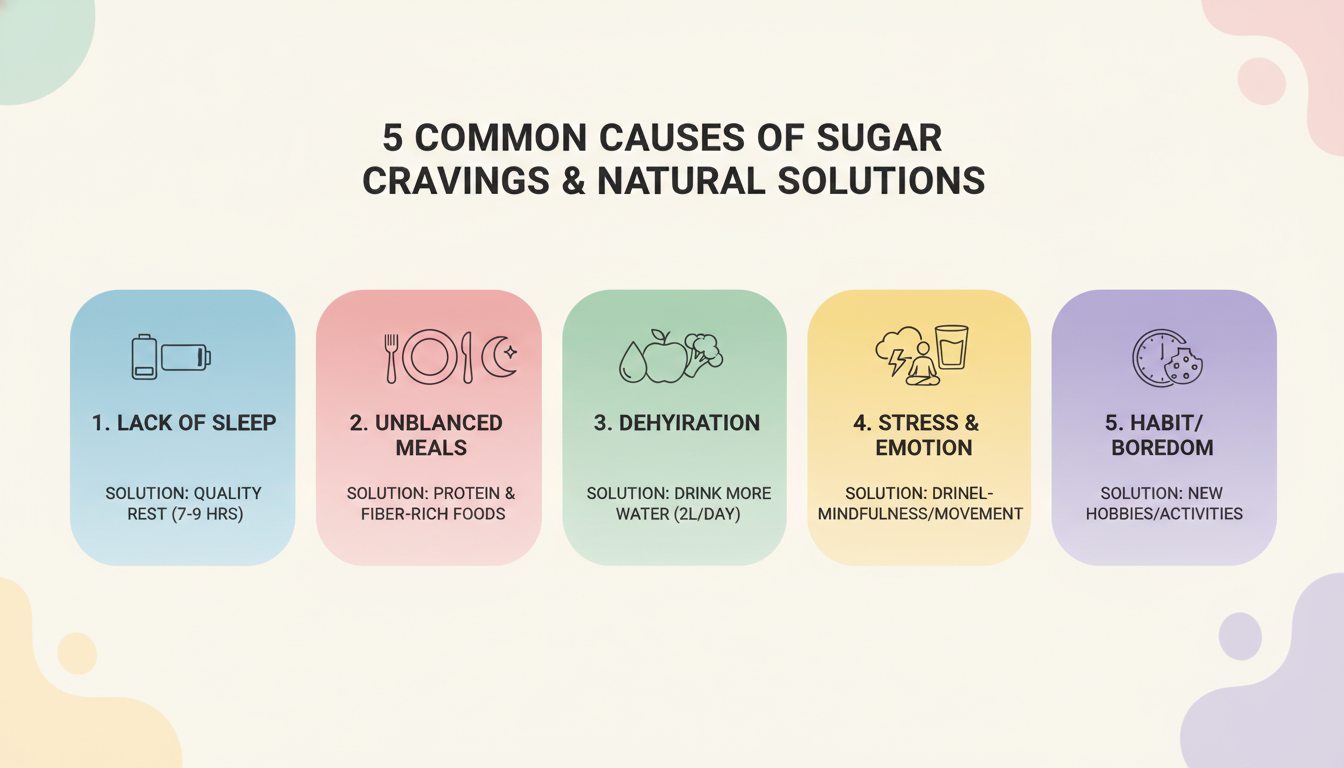
- Step 1 — Build a blood sugar-stabilizing plate (Start immediately): Every meal should include a quality protein source, fiber-rich vegetables, and a healthy fat. This combination slows glucose absorption and blunts post-meal insulin spikes. Aim for 20–30g of protein per meal. Expect noticeable improvement in cravings within 2–3 days of consistent eating this way.
- Step 2 — Eat every 3–4 hours (Week 1 onwards): Going more than 4–5 hours without eating almost guarantees a blood sugar crash. Set a phone reminder if needed. Even a small snack of nuts and a boiled egg can prevent the desperate sugar craving that strikes mid-afternoon.
- Step 3 — Hydrate strategically (Start today): Dehydration is frequently misread by the brain as hunger or a sugar craving. Drink at least 2–2.5 liters of water daily. Before reaching for something sweet, drink a full glass of water and wait 10 minutes — this alone can reduce sugar cravings noticeably in many people.
- Step 4 — Address nutrient gaps with targeted supplements (Week 1–2): Consider chromium picolinate (200–1000mcg daily), magnesium glycinate (200–400mg daily), and a B-complex vitamin. These are among the most evidence-supported supplements to reduce sugar cravings at the root level. Always consult your doctor before adding new supplements.
- Step 5 — Prioritize 7–9 hours of sleep (Ongoing): Sleep is a powerful and underused tool to reduce sugar cravings. Poor sleep disrupts leptin and ghrelin, your hunger-regulating hormones. If racing thoughts keep you awake, our guide on how to Calm Racing Mind Night offers practical techniques.
- Step 6 — Manage stress with a daily 10-minute practice (Week 1): Even brief stress management — deep breathing, a short walk, or light movement — lowers cortisol meaningfully. Lower cortisol means fewer stress-driven cravings. Physical activity like Proprioception Training Exercises can also support nervous system regulation.
- Step 7 — Gradually reduce sweet intensity (Weeks 2–4): Instead of cold turkey, reduce the sweetness of your foods slowly over 2–4 weeks. Swap soda for sparkling water with a splash of fruit juice, then plain sparkling water. Your taste buds recalibrate within 3–4 weeks, and less sweet foods begin to taste satisfying.
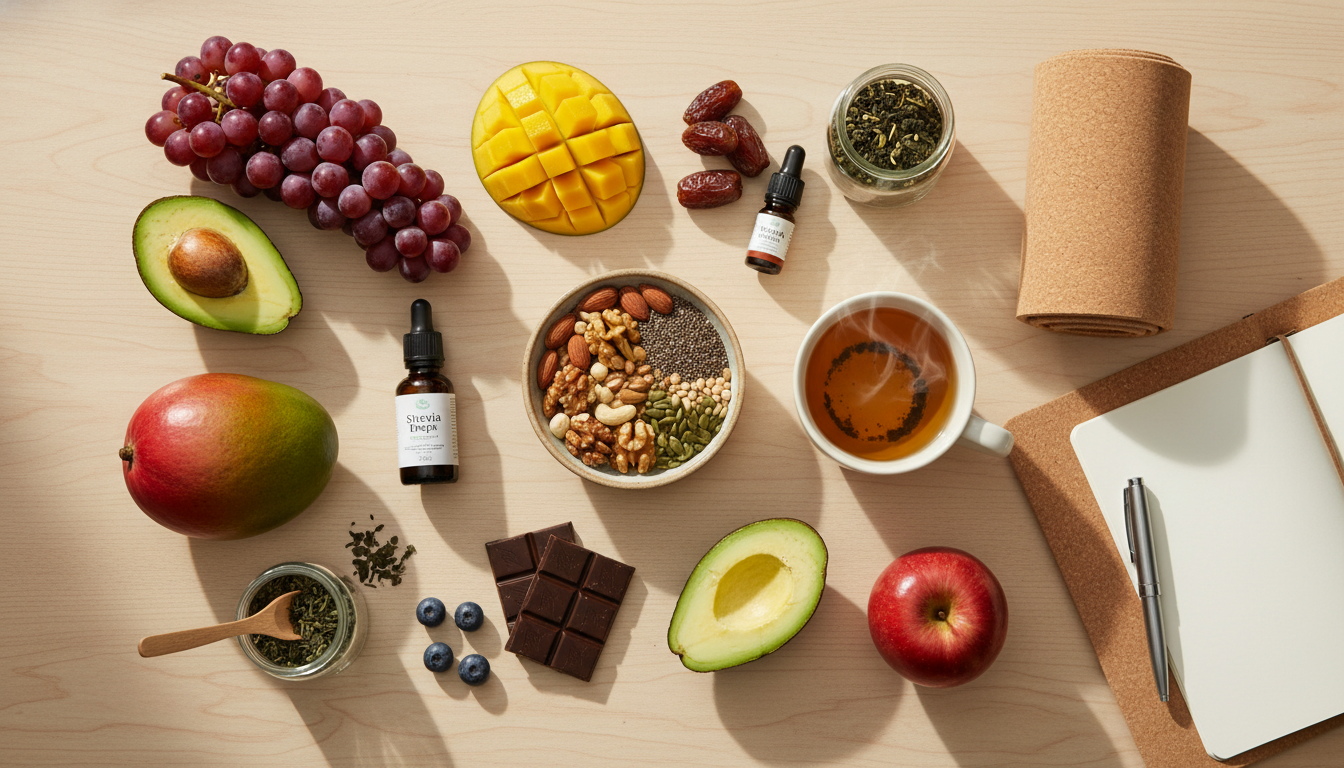
- Step 8 — Use natural sweet substitutes strategically (Ongoing): Fresh berries, a small square of 85% dark chocolate, or a Medjool date can satisfy a craving without triggering a blood sugar spiral. These are not unlimited — they’re tools to help you reduce sugar cravings instantly when the urge hits hard.
- Protein: Eggs, Greek yogurt, chicken, legumes, or protein shakes — all help stabilize blood sugar and reduce sugar cravings between meals.
- Fiber: Oats, broccoli, lentils, chia seeds — slow digestion and blunt glucose spikes significantly.
- Healthy fats: Avocado, olive oil, nuts — increase satiety and reduce the urgency of sweet cravings.
- Chromium-rich foods: Broccoli, whole grains, beef — support insulin function naturally.
- Magnesium-rich foods: Dark leafy greens, pumpkin seeds, dark chocolate — may directly reduce sugar cravings linked to deficiency.
For meal inspiration that puts these principles into practice, explore our Healthy Lunch Box Ideas — each option is designed to keep blood sugar steady throughout the day.
Reduce Sugar Cravings Mistakes to Avoid
Even with the best intentions, certain common approaches backfire badly. Here are the four biggest mistakes people make when trying to reduce sugar cravings effectively.
Mistake 1: Going Cold Turkey on Sugar
Cutting sugar completely overnight sounds disciplined, but it almost always triggers intense rebound cravings within 48–72 hours. Your brain registers a sudden dopamine drop and fights back hard.
A gradual reduction over 3–4 weeks is far more sustainable and leads to lasting results. Think of it as slowly lowering the volume rather than hitting a sudden off switch.
Mistake 2: Replacing Meals With Low-Fat Snacks
Low-fat products are often loaded with added sugar to compensate for flavor loss. They also lack the protein and fat needed to stabilize blood sugar, making this approach actively worsen cravings.
Always check labels and prioritize whole foods over processed “healthy” alternatives when trying to reduce sugar cravings for real.
Mistake 3: Skipping Meals to Cut Calories
Skipping breakfast or lunch sets the stage for a blood sugar crash by mid-afternoon. When that crash hits, the drive to eat something sweet becomes almost irresistible.
Regular, balanced meals are one of the most effective — and overlooked — strategies to reduce sugar cravings throughout the day. If evening eating is your weak spot, see our guide on how to Reduce Evening Snacking for targeted help.
Mistake 4: Ignoring Sleep and Stress
Most sugar-reduction plans focus entirely on food and ignore the hormonal impact of poor sleep and chronic stress. This leaves a huge driver of cravings completely unaddressed.
Tackle sleep and stress alongside dietary changes. You’ll find the food changes become dramatically easier when your hormones are working with you rather than against you.
Start Your Reduce Sugar Cravings Journey Today
You don’t need a perfect plan to begin. The single most effective first step to reduce sugar cravings is simple: add a quality protein source to your very next meal.
It could be two eggs at breakfast, a chicken breast at lunch, or a handful of almonds right now. Within 2 hours, notice how your craving intensity shifts. Most people are genuinely surprised.
From there, build one habit at a time. Hydrate more. Sleep more. Add chromium or magnesium if deficiency symptoms resonate with you. Reduce sweetness gradually rather than abruptly.
According to Harvard Health’s research on excess sugar and chronic disease risk, consistently high sugar intake is linked to serious long-term health consequences. Every small step you take to reduce sugar cravings today is an investment in your future health.
You’ve already taken the first step by reading this far. That matters more than you think. Progress is built on small, consistent wins — and yours starts right now.
Frequently Asked Questions
How to stop the urge to eat sugar?
The most effective way to stop the urge to eat sugar is to eat a protein-rich meal or snack, drink a full glass of water, and wait 10–15 minutes.
If the craving persists, a small piece of 85% dark chocolate or a handful of berries can satisfy the sweet urge without destabilizing blood sugar. Addressing root causes — blood sugar crashes, poor sleep, and chronic stress — is the most reliable long-term strategy to reduce sugar cravings at their source.
Which deficiency causes sugar cravings?
The most common nutrient deficiencies linked to sugar cravings are chromium, magnesium, and zinc. Chromium supports insulin sensitivity, and low levels make blood sugar harder to regulate.
Magnesium deficiency is especially associated with chocolate and sweet cravings. If this sounds familiar, check for Magnesium Deficiency Signs that you may be experiencing. Correcting these deficiencies is one of the most effective ways to reduce sugar cravings from the inside out.
Does methadone make you crave sugar?
Yes, methadone is well-documented to increase sugar cravings in many patients. It affects dopamine pathways in the brain — the same reward circuits activated by sugar — which can lead to a substitution effect where sweet foods become more appealing.
If you’re on methadone and experiencing strong sugar cravings, speak with your prescribing physician about nutritional support strategies to manage this side effect safely.
How do you know if you are addicted to sugar?
Signs of sugar addiction include intense cravings that feel out of control, eating sugar even when you don’t want to, mood changes or irritability when you go without it, and energy crashes followed by a strong urge to eat something sweet.
If you find yourself thinking about sugary foods frequently, feeling unable to stop once you start, or experiencing withdrawal-like symptoms when cutting back, these are strong indicators. Working to reduce sugar cravings gradually — rather than cold turkey — is the safest and most effective path forward.