

midday walk reset is one of the simplest ways to interrupt stress and return to focus. This guide shows practical methods you can use today.
If your afternoon feels heavy, a short walk can change the tone of the whole day. You do not need special equipment or a perfect route.
Table of Contents
What Is midday walk reset and Why It Works
A midday walk reset is a brief, intentional walk taken during the middle of the day. It helps you step away from screens, break up stress, and return with a clearer mind.
The goal is not exercise for performance. The goal is nervous system relief, mental clarity, and a better emotional state for the rest of the afternoon.
When stress builds up, attention narrows and decision-making gets harder. Walking creates gentle movement, fresh air, and a natural pause that your brain can use to recover.
research shows that even light movement can support mood and focus. That is why this simple habit often feels more powerful than it looks on paper.
Many people think they need a long workout to feel better. In reality, a 10-minute reset can be enough to reduce tension and restore perspective.
The best part is that this practice fits into a normal day. It works before meetings, after lunch, or anytime your energy drops.
Think of it as a circuit breaker for stress. When done consistently, it can become one of your most reliable tools for emotional balance.

This kind of break also supports healthier habits later in the day. You often return with more patience, better focus, and less urge to react impulsively.
For many readers, the biggest surprise is how fast it works. The combination of motion, sunlight, and distance from stressors can shift your mindset within minutes.
If you want more support for daily wellness, explore our wellness resources. They can help you build a stronger routine around movement, rest, and recovery.
midday walk reset Benefits for Daily Life
The benefits of a midday walk reset go beyond getting your steps in. It can improve how you think, feel, and respond under pressure.
One major benefit is reduced mental clutter. Walking gives your brain a low-demand task, which can help quiet the noise from a busy morning.
Another benefit is better emotional regulation. When you are physically moving, it is easier to shift out of frustration and back into calm problem-solving.
Many people also notice better energy after walking outside. A change of scenery, natural light, and movement can reduce the sluggish feeling that often appears after lunch.
There is also a social benefit. If you walk with a coworker, friend, or family member, the time can become a healthy check-in instead of another screen-based interaction.
A midday walk reset can even improve your evening. When you lower stress during the day, you may be less likely to carry it into dinner, family time, or bedtime.
Consistency matters more than intensity. A moderate daily habit often creates more value than a complicated plan you cannot repeat.
midday walk reset Tips for Beginners
Start with a route you already know. Familiar paths reduce friction and make it easier to begin without overthinking.
Keep the first version simple. The point is to create a repeatable pattern that feels realistic even on your busiest days.
Use these benefits as your motivation:
- Reduces stress: Calms your nervous system naturally.
- Improves sleep: Helps you rest better at night.
- Boosts energy: Increases natural vitality.
- Enhances mood: Promotes positive feelings.
- Builds consistency: Creates lasting habits.
Mayo Clinic experts often emphasize the value of regular movement for well-being. Small daily actions tend to add up over time.
If you want more practical advice, our health guidelines can help you use movement safely and wisely. That is especially useful if you are returning to exercise after a long break.
Another advantage is that this habit is easy to personalize. You can make it quiet, energizing, reflective, or social depending on what you need most.
Some people use the time to breathe deeply. Others prefer to listen to music, a podcast, or the sounds of nature.
The best version is the one you will actually do. That is the version that creates real stress relief and lasting change.
When you build the habit steadily, a midday walk reset becomes more than a break. It becomes a daily signal that your well-being matters.
How to Practice midday walk reset Effectively
Begin with a realistic time block. Even five to ten minutes is enough to create momentum and interrupt stress.
Choose a predictable trigger, such as finishing lunch or completing a morning work block. Linking the walk to a routine makes it easier to remember.
Before you step outside, decide what this break is for. You might want calm, clarity, creativity, or a reset from screen fatigue.
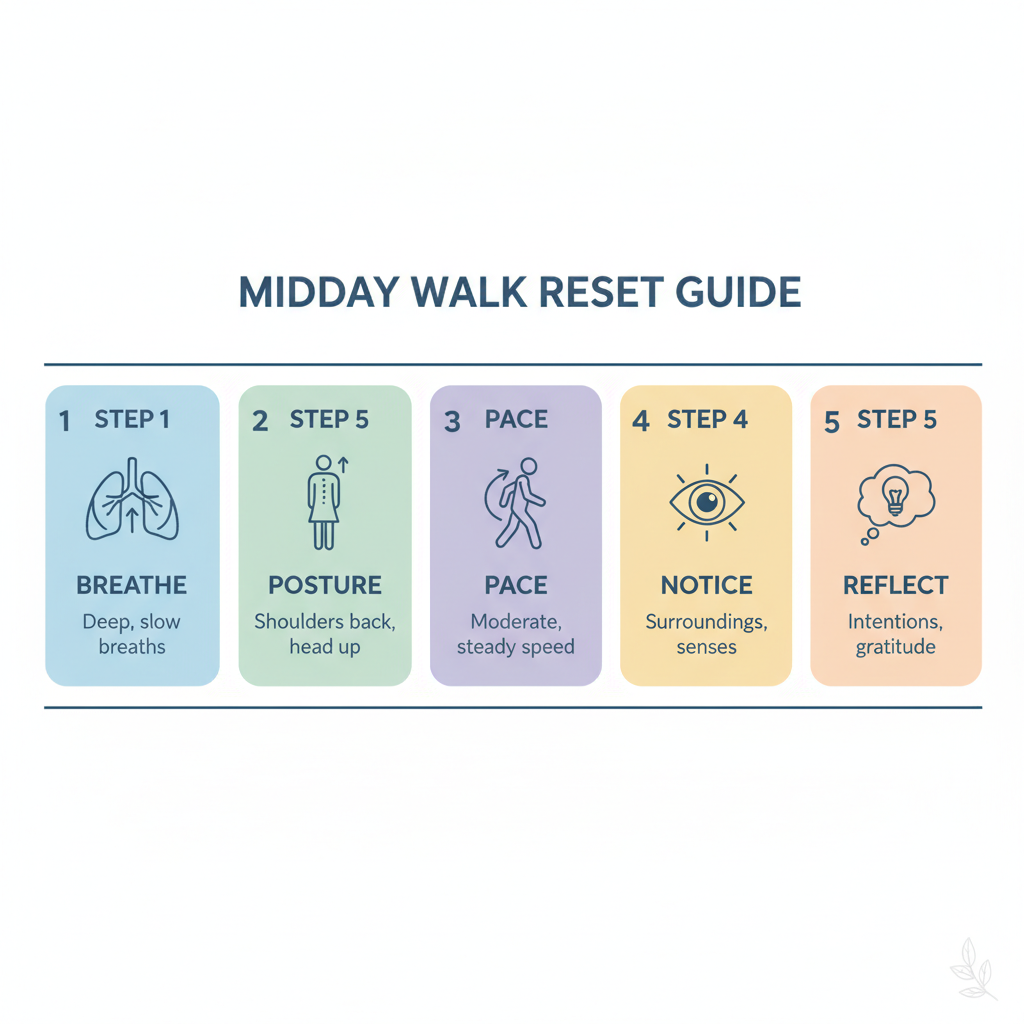
Walk at a pace that feels comfortable. The aim is not to push hard, but to loosen the grip of stress and invite steadier breathing.
Leave your phone in your pocket unless you need it for safety or navigation. Reducing interruptions helps the break feel more restorative.
Notice your surroundings as you move. Observing trees, buildings, sky, or people can pull attention away from looping thoughts.
Try to keep the walk simple and repeatable. A loop around the block, a lap in a park, or a path near your office can all work well.
After you return, take one minute to notice the change. Ask yourself whether your body feels looser, your breathing deeper, or your thoughts more organized.
That reflection matters because it reinforces the habit. When your brain connects the walk with relief, it becomes easier to repeat tomorrow.
For best results, treat it as a daily reset rather than an occasional fix. The steadiness of the practice is what gives it long-term value.
Many people also benefit from pairing the walk with hydration. Drinking water before or after the break can support a more refreshed feeling.
You may also want to add posture awareness. Relax your shoulders, keep your steps easy, and let your arms swing naturally.
If weather or location is a problem, a treadmill or indoor hallway can still work. The practice is about creating movement and separation, not perfection.
A midday walk reset becomes especially useful on difficult days. It gives you a structured way to slow down before stress turns into exhaustion.
To build momentum, remind yourself that small habits matter. Repeated often enough, they can reshape how your whole day feels.
If you want more reading, visit our more articles. You will find additional ideas for stress relief, routine building, and everyday wellness.
midday walk reset Techniques From Experts
Experts often recommend combining movement with attention. That means walking while staying aware of your breath, posture, and surroundings.
One technique is the breathing walk. Inhale for a few steps, exhale for a few steps, and keep the rhythm gentle and steady.
Another option is the sensory walk. Notice three things you can see, two things you can hear, and one thing you can physically feel.
This type of mindfulness can interrupt stress spirals. It helps your attention return to the present instead of replaying the morning.
You can also use a gratitude focus. During the walk, name a few things that are going well or a few people you appreciate.
Some people prefer a creative walk. They use the time to think through a challenge, brainstorm ideas, or make a decision without pressure.
Music can be helpful too. Choose calm tracks if you want relaxation, or uplifting songs if you need a more energized reset.
For office workers, this practice can be a practical boundary. It separates one block of work from the next and reduces the feeling of being stuck at a desk.
For parents and caregivers, it can serve as a brief pause to recover patience. That small window can change the tone of the rest of the day.
Some people like to set a timer. A timer removes the need to watch the clock and makes the walk feel easier to protect.
If you like structure, choose one technique per day. That keeps the experience fresh without making it complicated.
It can help to track how you feel before and after each walk. Simple notes in a journal can reveal patterns and motivate consistency.
When you experiment, pay attention to what feels sustainable. The best techniques support your real life, not an idealized routine.
That is why a midday walk reset is flexible. It can be quiet or social, structured or spontaneous, short or a bit longer.
According to WebMD studies, stress management often works best when the method is easy to repeat. Simplicity improves follow-through.
Once you find the style that fits you, the walk becomes more automatic. You will spend less energy deciding and more energy recovering.
Over time, the practice may help you notice stress earlier. That awareness is valuable because it gives you more choices before tension builds too high.
It can also support better boundaries with work. A planned break reminds you that productivity improves when recovery is part of the schedule.
As you keep going, your brain starts to associate movement with relief. That association can make the next walk feel even more effective.
Try not to judge the walk by how productive it looks. Judge it by how much lighter, calmer, and clearer you feel afterward.
The most powerful routines are often the simplest ones. A steady, repeatable walk can be a quiet but meaningful tool for long-term resilience.
Getting Started Today
Now is the right time to begin. Pick a realistic time today and commit to one short walk.
Make the first version easy enough to succeed. If you have only ten minutes, use ten minutes.
Set a reminder if needed. A small cue can make the habit much more dependable.
If you want accountability, tell a friend or coworker your plan. Shared goals often make habits easier to keep.
Do not wait for a perfect day. The best time to start is during a normal day when stress actually shows up.
After the walk, notice one thing that changed. It might be your breathing, your mood, or the way your shoulders feel.
That awareness helps you build confidence. It also gives you a reason to repeat the habit tomorrow.
Keep your expectations realistic. Small improvements are meaningful when they happen consistently.
As the habit grows, you may find that stress feels less overwhelming. The day still has challenges, but you handle them with more steadiness.
That is the real promise of a midday walk reset. It gives you a practical pause that helps you return to life with more calm and control.
Ready to transform your day with midday walk reset? Start today and give yourself the break your mind and body deserve.