
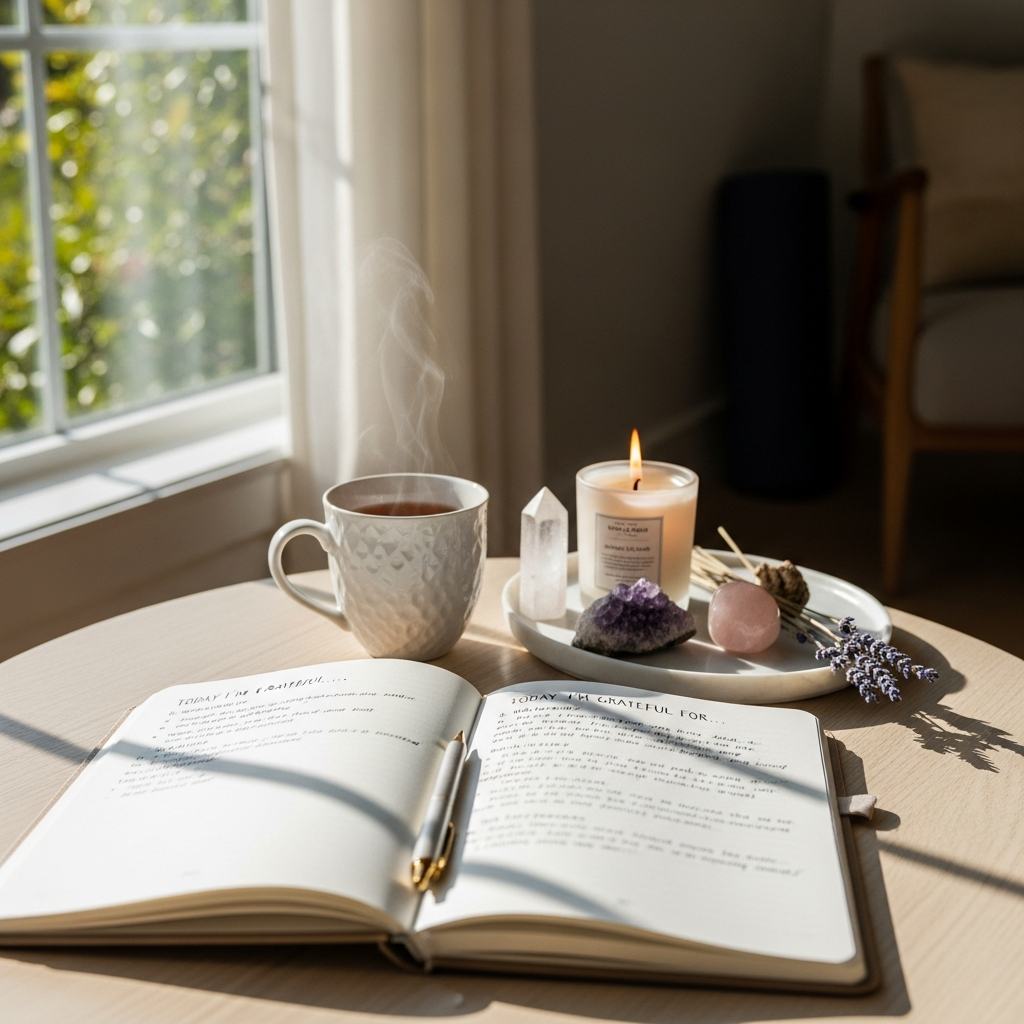
gratitude journaling is one of the simplest ways to calm your mind and soften daily stress. It helps you notice small wins, slow your thoughts, and feel more grounded.
When life feels busy, a short reflection practice can reset your mood. This beginner-friendly guide shows how to start, what to write, and how to keep going.
Table of Contents
What Is gratitude journaling and Why It Works
gratitude journaling is the habit of writing down moments, people, or experiences you appreciate. It shifts attention away from pressure and toward support.
That shift matters because stress often grows when the mind stays focused on problems. A written reflection gives your brain a new place to rest.
Many people use this practice at night, while others prefer mornings. The best time is the time you can repeat without effort.
It does not need fancy supplies or long entries. A notebook, a pen, and a few quiet minutes are enough to begin.
For readers who want a broader wellness foundation, the wellness resources page offers helpful tools that pair well with reflection habits.
Helpful background on stress and wellbeing can also be found in research shows how simple routines support emotional balance over time.
Many beginners worry they are not “doing it right.” The truth is that consistency matters more than perfect wording.
Instead of trying to write impressive notes, write honest ones. A short line about fresh air, a kind text, or a warm meal can change the tone of the day.
Another reason this habit works is that repetition builds familiarity. Your mind starts expecting a calmer moment, and that expectation can reduce tension.
Start small and keep your entries clear. The goal is not performance; the goal is a steadier response to everyday stress.

gratitude journaling Benefits for Daily Life
The benefits of this habit reach beyond a single good mood. It can improve how you sleep, how you think, and how you recover from difficult days.
By ending the day with appreciation, you create a softer mental transition into rest. That is especially useful if your mind tends to replay problems at night.
People often notice that they feel less overwhelmed after a week or two. Small entries can build a sense of stability that grows over time.
It can also help you spot positive patterns you normally overlook. You may realize you receive more support, have more progress, or experience more good moments than expected.
Here are a few of the most common benefits:
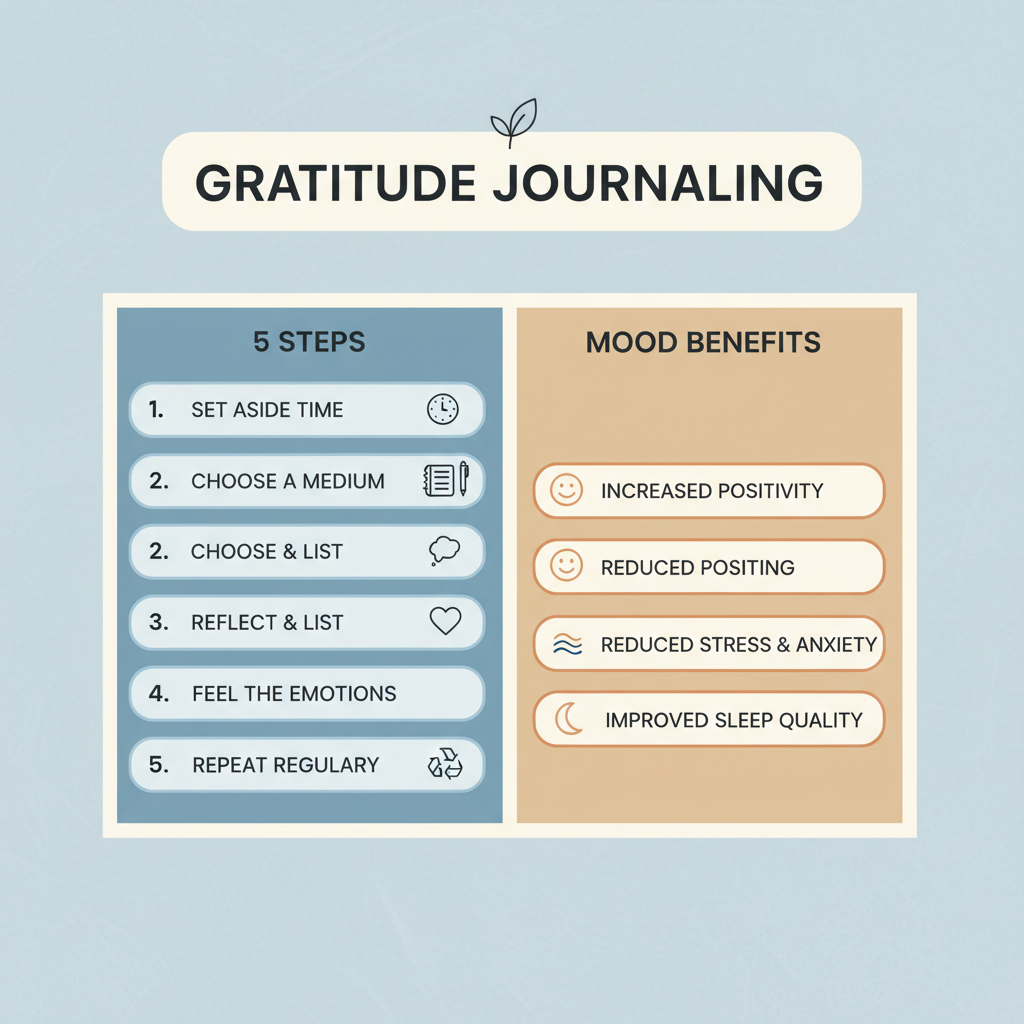
- Reduces stress: Calms your nervous system naturally.
- Improves sleep: Helps you rest better at night.
- Boosts energy: Increases natural vitality.
- Enhances mood: Promotes positive feelings.
- Builds consistency: Creates lasting habits.
According to Mayo Clinic experts, healthy routines can support better stress management and emotional resilience.
That is one reason a small reflective habit can have a big impact. It supports both mental clarity and emotional recovery.
For more related support, browse our more articles for practical wellness ideas that fit into a busy lifestyle.
Even on hard days, there is usually something worth naming. A safe commute, a decent conversation, or a completed task can become a foothold.
Over time, your brain learns to search for those footholds automatically. That is what makes the practice so helpful during stress.
If you are trying to build a more peaceful routine, this habit is a strong place to begin. It is simple, portable, and easy to sustain.
gratitude journaling Tips for Beginners
Begin with three items, not ten. A short list lowers pressure and makes the habit easier to repeat each day.
Use specific language whenever possible. “A warm cup of tea” is more vivid than “food,” and detail makes the reflection feel real.
Try pairing your notes with another routine, like brushing your teeth or making tea. That connection makes the practice easier to remember.
Do not wait for a perfect mood. Some of the best entries come on difficult days because they remind you that support still exists.
If you want a gentle starting point, write one thing that helped you, one thing you learned, and one thing you hope for tomorrow.
Before making any lifestyle change, it is wise to review our health guidelines. Simple habits are usually safe, but staying informed is always smart.
Use a notebook you enjoy opening. A pleasant physical space can make the habit feel more rewarding and easier to maintain.
Keep your expectations realistic. The aim is not to eliminate stress forever; the aim is to respond to stress with more balance.
A useful approach is to write as if you are speaking to a friend. That tone keeps your entries warm, direct, and honest.
As the practice becomes familiar, you may need less time to complete it. What once felt like an exercise can become a natural pause.
How to Practice gratitude journaling Without Overwhelm
Start by choosing one consistent time. Morning works well for intention, while evening works well for reflection and release.
Next, choose one simple format. You might list three items, answer one question, or write one short paragraph about the day.
Keep your notebook visible. If it stays hidden in a drawer, you are less likely to remember it when life gets busy.
Set a timer for five minutes if needed. A short session can feel easier than a long one, and shorter sessions often build better consistency.
Do not judge the quality of your notes. Some days will be thoughtful, and some days will be brief. Both count.
When stress is high, focus on basics. You can write about comfort, safety, support, or one tiny improvement in your day.
This is also a good time to stay connected with trusted wellness education. Reliable advice from WebMD studies can help you understand how stress affects the body and mind.
If you miss a day, return the next day without guilt. Missing one entry does not erase the value of the habit.
To make the process even easier, keep your prompts ready. A simple question can remove decision fatigue and help you begin faster.
Examples include: What made me smile today? Who helped me recently? What challenge did I handle better than expected?
You can also use voice notes first and transcribe them later. This is helpful if you think better by speaking than writing.
Remember that the best routine is the one you will actually keep. Simplicity is an advantage, not a limitation.
As your confidence grows, your reflections may become more detailed. That growth is natural, but it is never required.
Many people find that the habit becomes easier once they connect it to a feeling. If writing helps you feel calmer, you will want to return to it.
That positive loop is part of why the practice remains popular. It gives the mind a structured way to notice what is working.
With repetition, stress responses can feel less intense. The habit does not remove challenges, but it can improve how you move through them.
gratitude journaling Techniques That Make It Easier
Different techniques suit different personalities. The best method is the one that feels simple, realistic, and repeatable.
One popular option is the three-good-things method. At the end of the day, list three positive moments and a brief reason they mattered.
Another option is the sentence stem method. Write “I am grateful for…” and complete the sentence three times.
You can also use category-based entries. For example, write one item for health, one for relationships, and one for comfort.
Some people enjoy themed days. On Monday, they may write about people; on Tuesday, they may write about food; and on Wednesday, they may write about progress.
There is also the challenge-reframe method. Write about a stressor, then name one helpful part of the experience or one thing it taught you.
That does not mean ignoring pain. It means adding a wider view so hard moments do not dominate the whole picture.
Visual learners may enjoy doodling, color-coding, or adding stickers. A creative format can make the habit feel more inviting.
If you prefer structure, use a template with prompts. Repeated prompts reduce friction and make it easier to continue on low-energy days.
Try the “one line, one reason” method if you are short on time. Write one appreciative note and explain why it matters in one short phrase.
You can also reflect on progress. Even if your situation is not perfect, you may still have grown stronger, wiser, or more patient.
Those observations help you see evidence of resilience. That can be especially reassuring during stressful seasons.
Sometimes the most useful technique is the most boring one. A simple daily list often works better than an elaborate system you never use.
If you want to make the practice more meaningful, read your old entries occasionally. Looking back can remind you that support has been present before.
That memory can reduce fear and encourage hope. It is easier to trust the future when you can see past progress.
Simple structure, repeated often, is what makes the habit effective. Over time, small notes can become a reliable source of calm.
Getting Started Today
You do not need a perfect plan to begin. You only need a pen, a page, and a few honest thoughts.
Pick one time today and write three items you appreciate. Keep the list short so the habit feels easy from the start.
If stress feels heavy, keep your first entry very small. Even one line can create momentum and make tomorrow easier.
Review our wellness resources if you want more simple tools that support a calmer routine. Small changes often work best together.
As you continue, notice what changes most. You may sleep better, feel less tense, or simply feel more aware of support around you.
The real strength of the practice is its simplicity. It asks you to pause, notice, and record what is already helping you.
That pause can be powerful during stressful weeks. It creates a moment of perspective when your thoughts need balance most.
If you want to stay consistent, attach the habit to something you already do. This makes the routine easier to remember and follow.
Many beginners succeed by keeping the goal small. Five minutes, three notes, and one quiet moment are enough to create real change.
Over time, you may find that the practice becomes a trusted part of your day. It can help you slow down and see life more clearly.
For ongoing support and fresh ideas, explore our more articles. A steady routine is easier when you have useful guidance.
Ready to transform your life with gratitude journaling? Start today and experience the difference.