
Table of Contents
Understanding Chronic Inflammation and Why It Matters
Eating the right anti-inflammatory foods could be the single most impactful change you make for your health this year. If you wake up tired, ache in your joints, or struggle through afternoon brain fog, inflammation may be the hidden driver.
Chronic low-grade inflammation is not the same as the redness you see around a cut. It is a slow, silent process happening inside your body every day. You may not feel it directly, but you feel its effects.
According to research published in the journal Nutrients, chronic inflammation is linked to fatigue, joint pain, cognitive decline, cardiovascular disease, and metabolic disorders. The good news is that food is one of the most powerful tools to address it.
Your daily plate is either feeding inflammation or fighting it. Most standard Western diets — high in refined sugar, processed seed oils, and ultra-processed foods — constantly push your immune system into overdrive.
Incorporating anti-inflammatory foods consistently is one of the most evidence-backed strategies for reducing that immune overdrive. Small dietary shifts compound into meaningful health changes over weeks and months.
Shifting to a diet rich in anti-inflammatory foods does not require perfection. It requires a pattern. That pattern starts with understanding what is actually going on inside your body and which foods make the biggest difference.
The Science Behind Anti-Inflammatory Foods
Inflammation is measured in your blood through biomarkers like C-reactive protein (CRP) and interleukin-6 (IL-6). When these markers are elevated, your risk for heart disease, diabetes, and even depression rises significantly.
A landmark study published in JAMA found that participants following a Mediterranean-style diet — centered on anti-inflammatory foods — showed meaningful reductions in CRP and IL-6 within just 12 weeks. That is less than three months of consistent eating.
The Mediterranean diet is not the only evidence-backed approach. Harvard T.H. Chan School of Public Health outlines how anti-inflammatory eating patterns reduce oxidative stress and support immune regulation over time.
How Anti-Inflammatory Foods Work in the Body
Many anti-inflammatory foods contain polyphenols, omega-3 fatty acids, and antioxidants that interrupt the inflammatory signaling cascade. Think of them as natural brakes on a runaway immune response.
Omega-3 fatty acids found in fatty fish like salmon and sardines produce compounds called resolvins and protectins. These actively help the body resolve inflammation — not just suppress it.
Polyphenols in berries, dark leafy greens, and extra virgin olive oil inhibit NF-kB, a key molecular switch that turns on inflammatory genes. This is real, measurable biochemistry — not wellness marketing.
Common myth debunked: Many people believe that taking anti-inflammatory supplements like fish oil or curcumin capsules alone will do the job. Research consistently shows that whole-food dietary patterns outperform isolated supplements. Supplements can complement a good diet, but they cannot replace it.
Your gut microbiome also plays a critical role. Beneficial gut bacteria thrive on fiber from anti-inflammatory foods like legumes and vegetables, and they produce short-chain fatty acids that reduce systemic inflammation. To learn more about this connection, read our guide on how to Improve Gut Health Naturally.
Step-by-Step Anti-Inflammatory Foods Guide
This is your practical, beginner-friendly roadmap. You do not need to overhaul your diet overnight. Follow these steps progressively over four weeks and you will build a sustainable, powerful pattern of eating anti-inflammatory foods every single day.
Step 1 — Learn the Core Anti-Inflammatory Foods List (Week 1)
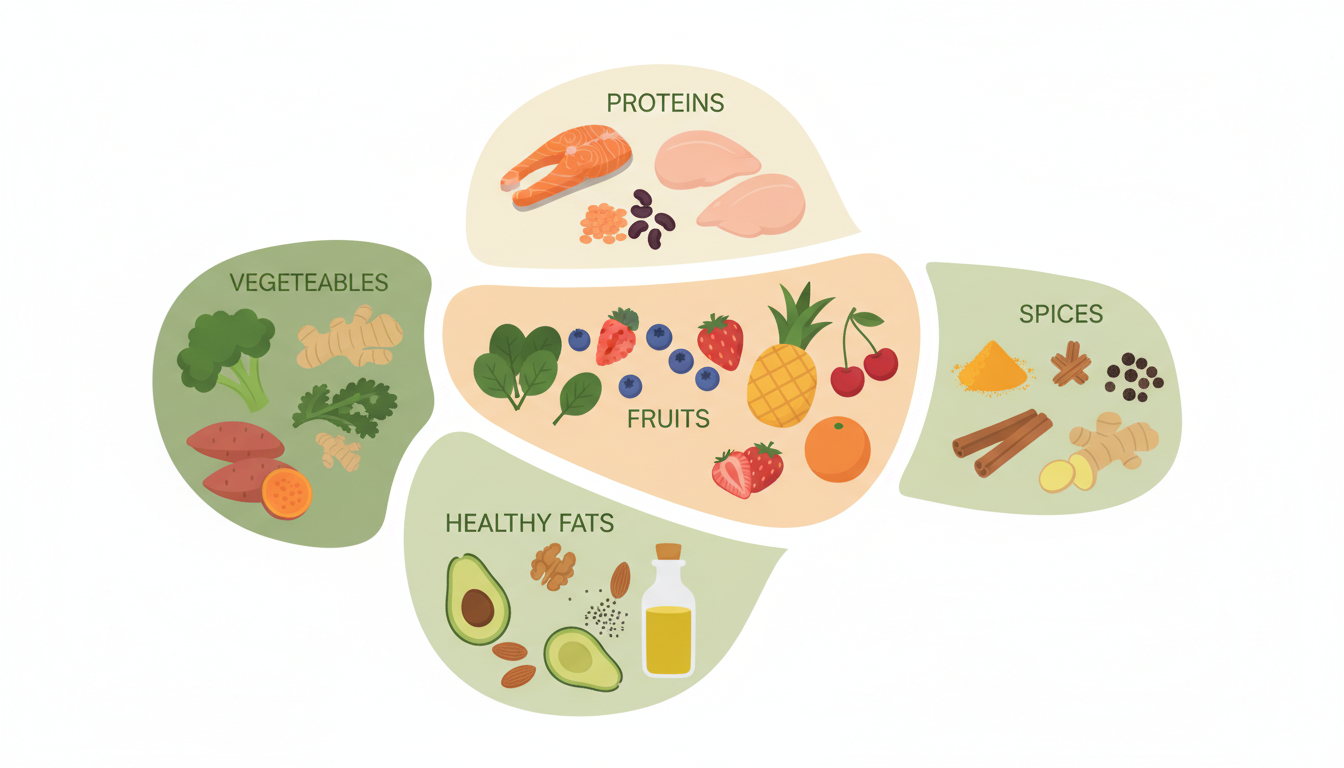
Before you change anything, get familiar with what actually belongs on your plate. Here is your foundational list of anti-inflammatory foods to start building around:
- Fatty fish (salmon, sardines, mackerel, herring): Rich in EPA and DHA omega-3s that directly reduce inflammatory markers. Aim for 2–3 servings per week.
- Leafy greens (spinach, kale, collard greens, Swiss chard): Packed with vitamin K, folate, and antioxidants that protect cells from oxidative damage.
- Berries (blueberries, strawberries, raspberries, blackberries): Among the highest-polyphenol foods available. Studies show blueberries may reduce CRP by up to 25% with regular consumption.
- Extra virgin olive oil: Contains oleocanthal, a natural compound with effects similar to ibuprofen at the cellular level. Use it daily.
- Turmeric and ginger: Curcumin in turmeric and gingerols in ginger are two of the most studied natural anti-inflammatory compounds. Combine turmeric with black pepper to boost absorption by up to 2,000%.
- Nuts and seeds (walnuts, almonds, flaxseed, chia seeds): Provide healthy fats, magnesium, and fiber — a triple threat against inflammation.
- Tomatoes: High in lycopene, especially when cooked in olive oil, which dramatically increases lycopene bioavailability.
- Whole grains (oats, quinoa, brown rice): Fiber feeds beneficial gut bacteria and helps regulate blood sugar, both of which lower inflammatory load.
- Legumes (lentils, chickpeas, black beans): Excellent plant-based protein and prebiotic fiber sources that support a low-inflammation gut environment.
- Green tea: EGCG, a catechin found in green tea, has been shown in multiple trials to reduce CRP and support immune balance.
This is not a complete top 20 anti-inflammatory foods list, but it covers the most research-backed, accessible options you can find in any grocery store. Save this as your personal anti-inflammatory foods reference or screenshot it for your next shopping trip.
Step 2 — Make One Swap Per Meal (Week 1–2)
Do not try to eat perfectly. Instead, at each meal, swap one pro-inflammatory ingredient for one anti-inflammatory alternative. This is the fastest way to shift your dietary pattern without feeling overwhelmed.
Replace refined vegetable oils (canola, soybean, sunflower) with extra virgin olive oil for cooking and dressings. Swap white bread or processed cereal for oats or whole grain toast topped with nut butter.
At dinner, replace processed meat once or twice a week with a fatty fish option. Even canned sardines or wild-caught salmon from a pouch count. Start building your breakfasts with more intention — our guide to Build Filling Breakfast can help you get that first meal right.
Step 3 — Build Anti-Inflammatory Meals Around a Template (Week 2–3)
A simple, repeatable template removes decision fatigue and keeps anti-inflammatory foods at the center of every plate. Use this structure for lunch and dinner:
50% of your plate: non-starchy vegetables and leafy greens. 25% of your plate: quality protein (fatty fish, legumes, or pasture-raised poultry). 25% of your plate: fiber-rich complex carbohydrates. Finish with: a drizzle of olive oil or a small handful of nuts and seeds.
This template naturally incorporates anti-inflammatory foods at every meal without requiring calorie counting or complicated recipes. For lunch inspiration that fits this pattern perfectly, explore our Balanced Lunch Ideas.
Step 4 — Add Anti-Inflammatory Spices and Drinks (Week 3–4)
Small additions to your daily routine compound over time. Start adding turmeric and black pepper to soups, eggs, or roasted vegetables. Brew green tea in the morning instead of a second coffee. Add a tablespoon of ground flaxseed to your morning oats or smoothie.
These micro-habits layer anti-inflammatory compounds into your day without requiring new meals or major effort. Over 4 weeks, you will have quietly transformed your inflammatory load.
Step 5 — Reduce Sugar Simultaneously (Week 3–4)
Reducing refined sugar is as important as adding anti-inflammatory foods. Sugar spikes blood glucose, triggers insulin responses, and drives inflammatory cytokine production — undoing much of the good your healthy foods provide.
You do not have to eliminate sugar entirely. Start by cutting sweetened beverages and packaged snacks. If cravings are derailing you, read our practical guide on how to Beat Sugar Cravings for science-backed strategies.
Anti-Inflammatory Foods Mistakes to Avoid
Even motivated beginners fall into predictable traps. Knowing these mistakes in advance keeps you from wasting weeks of effort.
Mistake 1 — Chasing Single Superfoods Instead of a Pattern
This is the most common error. People hear that turmeric is powerful and start taking curcumin capsules while continuing to eat processed food, refined sugar, and seed oil-heavy meals. The research is unambiguous: the overall dietary pattern matters far more than any single food or supplement.
A 2020 review in Nutrients confirmed that dietary patterns — not individual nutrients — are the strongest predictors of inflammatory marker levels. Think of your plate as an ecosystem, not a collection of isolated superfoods.
Mistake 2 — Ignoring Cooking Methods
How you cook matters as much as what you cook. Deep-frying vegetables in refined seed oils, or charring meat at high temperatures, generates advanced glycation end products (AGEs) that directly promote inflammation. Roasting, steaming, poaching, and sautéing in olive oil preserve the anti-inflammatory properties of your ingredients.
Even healthy anti-inflammatory foods can become pro-inflammatory when cooked incorrectly. Choose gentle cooking methods and use olive oil as your primary fat.
Mistake 3 — Expecting Results Overnight
Inflammation that has built up over years does not resolve in three days. Most clinical studies showing meaningful reductions in CRP and IL-6 run for 8 to 12 weeks. Give your body time.
You may notice improved energy and reduced bloating within 1–2 weeks, but deeper changes in joint pain and systemic inflammation typically take 6–12 weeks of consistent eating of anti-inflammatory foods.
Set a realistic 90-day benchmark. Track how you feel every two weeks rather than day-to-day. Consistency, not perfection, is what drives results.
Mistake 4 — Forgetting About Hydration and Sleep
Diet is essential, but it works in partnership with hydration and sleep. Chronic dehydration concentrates inflammatory compounds in the blood. Poor sleep elevates cortisol and CRP independently of diet.
Aim for at least 7–8 hours of quality sleep and 8 cups of water daily. Anti-inflammatory eating is most effective when these foundational health habits support it. Interestingly, physical posture also plays a role in systemic stress — our guide on How To Fix Rounded Shoulders addresses one often-overlooked contributor to chronic muscle tension and discomfort.
Start Your Anti-Inflammatory Foods Journey Today
You do not need a complete diet overhaul to begin. Right now, at your very next meal, make one swap. Replace the seed oil with olive oil. Add a handful of berries to your breakfast. Throw a handful of spinach into whatever you are already making.
That is how lasting change with anti-inflammatory foods actually works — one small decision repeated daily until it becomes automatic. There is strong research support for this approach, and the benefits compound with time.
Women navigating hormonal changes, perimenopause, or autoimmune conditions may find anti-inflammatory foods for women particularly relevant, as estrogen fluctuations directly affect inflammatory pathways. Men dealing with metabolic issues benefit equally from this pattern.
And if you share your home with pets, it is worth noting that some owners now look into anti-inflammatory foods for dogs as well — always consult your vet before changing an animal’s diet.
According to the Mayo Clinic’s overview of the Mediterranean diet, this way of eating is not just an anti-inflammatory strategy — it is one of the most evidence-backed dietary patterns for long-term health and longevity overall.
You have everything you need to begin. Your body is capable of healing and adapting when you consistently give it the right fuel. Start with one meal, build to one day, then one week. Within 90 days of eating anti-inflammatory foods consistently, you may be amazed at how different you feel.
Frequently Asked Questions
What drink reduces inflammation?
Green tea is one of the most well-researched anti-inflammatory beverages, thanks to its high concentration of EGCG catechins that have been shown to reduce CRP levels. Tart cherry juice, turmeric-ginger tea, and plain water also support the body’s ability to manage inflammatory load. Avoiding sugary drinks and alcohol consistently is equally important as adding anti-inflammatory beverages.
What to eat to reduce inflammation immediately?
While no food produces instantaneous results, some options work relatively quickly to calm inflammatory signaling. Eating a serving of wild-caught fatty fish, a large handful of blueberries, or a salad dressed with extra virgin olive oil and topped with walnuts all deliver potent anti-inflammatory compounds within a single meal. Pairing turmeric with black pepper in your food is another fast and effective way to introduce curcumin into your system.
How do you flush out inflammation in your body?
There is no true “flush,” but you can consistently reduce inflammatory burden through a combination of dietary changes, hydration, sleep, and movement. Eating a diet centered on anti-inflammatory foods, drinking adequate water, getting 7–9 hours of sleep, and engaging in moderate exercise like walking or swimming all help lower circulating inflammatory markers over time. Reducing refined sugar and processed oils removes the primary dietary drivers of chronic inflammation.
What is the strongest anti-inflammatory food?
Research consistently points to fatty fish rich in omega-3s (particularly salmon, sardines, and mackerel) and extra virgin olive oil as among the most potent single anti-inflammatory foods available. Turmeric’s active compound curcumin is also exceptionally well-studied for its ability to inhibit NF-kB inflammatory pathways. However, no single food outperforms the cumulative power of an overall anti-inflammatory dietary pattern eaten consistently over weeks and months.