Balance Exercises for Adults: Improve Stability & Prevent Falls
Balance exercises for adults are targeted movements that improve stability, prevent falls, and enhance coordination. These exercises challenge your body’s balance systems – proprioceptive, vestibular, and visual – through progressive difficulty levels. Regular practice can benefit people of all ages and fitness levels, from seniors seeking fall prevention to desk workers combating sedentary effects.
Did you know that falls are the leading cause of injury-related deaths among adults over 65? According to the CDC Fall Prevention Guidelines, one in four older adults falls each year, but balance issues can affect people of all ages. As we get older or lead more sedentary lifestyles, our balance naturally declines. This makes balance exercises for adults essential for maintaining independence and preventing injuries. Poor posture, like forward head posture, can further compromise stability by shifting your center of gravity. The good news is that balance can be improved at any age through targeted exercises. This comprehensive guide provides science-backed balance exercises for adults of all fitness levels, from beginners to advanced practitioners. You’ll learn progressive exercises that enhance stability, prevent falls, and improve overall coordination.
The Science of Balance: Understanding Your Body’s Stability System
Your body maintains balance through three interconnected systems working together. First, the proprioceptive system uses sensors in your muscles and joints to tell your brain where your body is in space. Second, the vestibular system in your inner ear detects head movement and position. Third, your visual system provides information about your environment. When these systems communicate effectively, you maintain stability effortlessly.
Research from the National Institute on Aging shows that regular balance improvement activities can strengthen these systems. As we age or become less active, these systems may weaken. However, targeted proprioception drills can retrain your body’s awareness. This stability training helps prevent the natural decline that occurs over time.
Understanding this science helps explain why certain exercises work. For example, standing on one leg challenges your proprioceptive system. Turning your head while standing engages your vestibular system. Closing your eyes during exercises removes visual cues, forcing other systems to compensate. This knowledge empowers you to choose effective balance exercises for adults.
Beginner Balance Exercises: Building a Foundation
Starting with simple exercises is crucial for building confidence and preventing injury. These best balance exercises for beginners focus on developing fundamental stability skills. Always perform these exercises near a sturdy chair or wall for support if needed.
1. Heel-to-Toe Walking
Walk slowly in a straight line, placing the heel of one foot directly in front of the toes of the other foot. This simple exercise improves coordination and challenges your balance in a controlled way. Aim for 10-15 steps forward, then turn around and repeat.
2. Single-Leg Stands
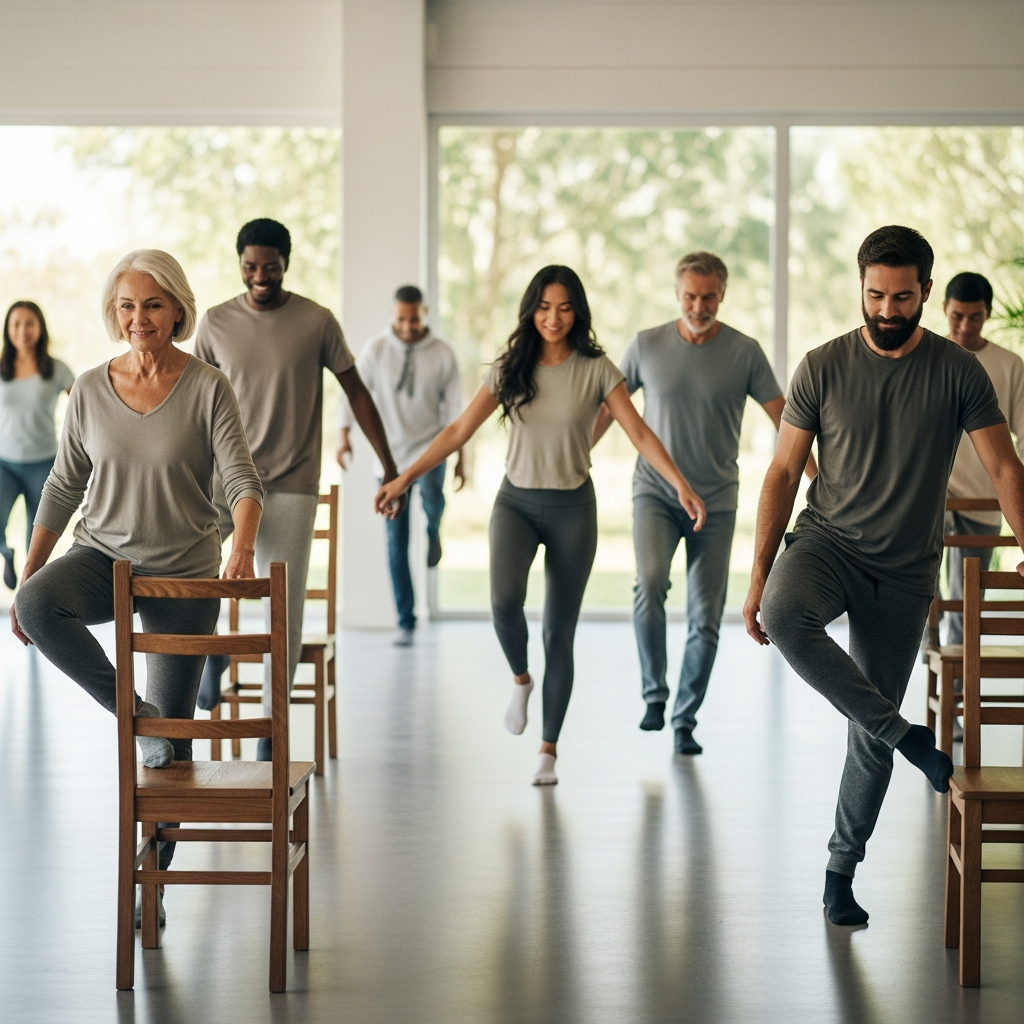
Hold onto a chair and lift one foot slightly off the ground. Maintain this position for 10-15 seconds, then switch legs. As you improve, try using lighter support or releasing the chair briefly. This exercise strengthens ankle stabilizers and improves proprioception.
3. Seated Marching
Sit tall in a chair and alternately lift your knees as if marching. This safe exercise improves hip mobility and core engagement without risk of falling. People with tight hamstrings may find this particularly beneficial for improving flexibility.
The American Council on Exercise recommends starting with 5-10 minutes daily. Consistency matters more than duration when beginning balance exercises for adults. Listen to your body and progress gradually.
Intermediate Stability Training: Progressing Your Skills
Once you’ve mastered beginner exercises, you can progress to more challenging movements. This stability training phase introduces dynamic balance challenges that better simulate real-world situations.
1. Tandem Stand with Arm Movements
Stand with one foot directly in front of the other (heel to toe). Once stable, add arm movements like reaching forward, sideways, or overhead. This challenges your balance while engaging your core. People with rounded shoulders should focus on maintaining proper posture during these movements.
2. Clock Reach Exercise
Imagine standing in the center of a clock face. While balancing on one leg, reach the opposite foot to different “hours” on the clock (12, 3, 6, 9 o’clock positions). This improves dynamic stability and hip mobility.
3. Balance Board or Cushion Training
Using an unstable surface like a balance board or cushion dramatically increases the challenge. Start with both feet on the surface, then progress to single-leg stands. These tools provide excellent proprioception drills that enhance neural connections.
Intermediate exercises should be performed 3-4 times weekly for optimal results. Always warm up with 5 minutes of light cardio first. These balance exercises for adults build the foundation for more advanced movements.
Advanced Proprioception Drills for Enhanced Coordination
Advanced practitioners can challenge their balance systems with complex movements. These proprioception drills and coordination exercises require greater focus and body awareness.
1. Single-Leg Deadlifts
Balance on one leg while hinging forward at the hips, extending the opposite leg behind you. Return to standing position without touching the raised foot to the ground. This exercise combines balance, strength, and flexibility in one movement.
2. Eyes-Closed Balance Challenges
Remove visual cues by performing balance exercises with your eyes closed. Start with simple stands, then progress to more complex movements. This forces your proprioceptive and vestibular systems to work harder, creating significant balance improvement.
3. Dynamic Surface Training
Combine balance challenges with movement on unstable surfaces. Try walking on foam pads, performing lunges on balance discs, or doing squats on a BOSU ball. These advanced coordination exercises simulate real-world instability.
Research suggests that advanced balance exercises for adults can improve athletic performance and reduce injury risk. However, always prioritize safety and use spotters when attempting challenging movements.
Fall Prevention Exercises for Seniors
For older adults, how to improve balance for seniors becomes a crucial health consideration. These targeted fall prevention exercises focus on safety and functional movements.
1. Chair Stands
Sit in a sturdy chair, then stand up without using your hands for support. Lower back down with control. This functional movement strengthens leg muscles used in daily activities. Perform 8-12 repetitions daily.
2. Side Leg Raises
Hold onto a chair and lift one leg out to the side, keeping your torso straight. This strengthens hip abductors that help prevent sideways falls. The National Institute on Aging recommends this exercise specifically for fall prevention.
3. Backward Walking
Walking backward (with supervision) challenges different balance systems than forward walking. This improves proprioception and prepares you for unexpected movements. Start with just a few steps while holding onto a counter.
Seniors should focus on consistency rather than intensity. Daily practice of these balance exercises for adults over 65 can significantly reduce fall risk. Always consult a healthcare provider before starting new exercises.
Balance Training for Desk Workers
Sedentary office workers face unique balance challenges from prolonged sitting. This balance training for desk workers can be incorporated into your workday without special equipment.
1. Desk-Supported Single-Leg Stands
While waiting for documents to print or during phone calls, practice single-leg stands while lightly touching your desk for support. Alternate legs every 30-60 seconds throughout the day.
2. Seated Balance Challenges
Sit on an exercise ball instead of a chair for portions of your workday. This engages core muscles and improves proprioception while you work. Start with 15-20 minute intervals.
3. Walking Meetings
Suggest walking meetings instead of sitting in conference rooms. The gentle movement and changing surfaces provide natural balance improvement opportunities throughout your workweek.
The American Council on Exercise notes that even small amounts of movement throughout the day can counteract the negative effects of prolonged sitting. These balance exercises for adults with desk jobs help maintain stability despite sedentary work.
Conclusion: Building Lasting Stability
Incorporating regular balance exercises for adults into your routine offers numerous benefits. These exercises can improve stability, prevent falls, and enhance overall coordination at any age. Remember these key takeaways:
- Start at your level and progress gradually through beginner, intermediate, and advanced exercises
- Consistency matters more than intensity – daily practice yields better results than occasional intense sessions
- Address contributing factors like tight hip flexors that can compromise your balance
- Combine balance training with strength and flexibility exercises for comprehensive fitness
- Listen to your body and consult healthcare providers for personalized guidance
Your journey to better balance starts today. Choose one exercise from this guide and practice it daily this week. Share your progress in the comments below or with friends who might benefit from these balance exercises for adults. Remember that small, consistent efforts lead to significant improvements in stability and confidence.
Medical Disclaimer: This article is for informational purposes only and does not constitute medical advice. Always consult a qualified healthcare provider before making changes to your health routine or if you have specific medical concerns.