
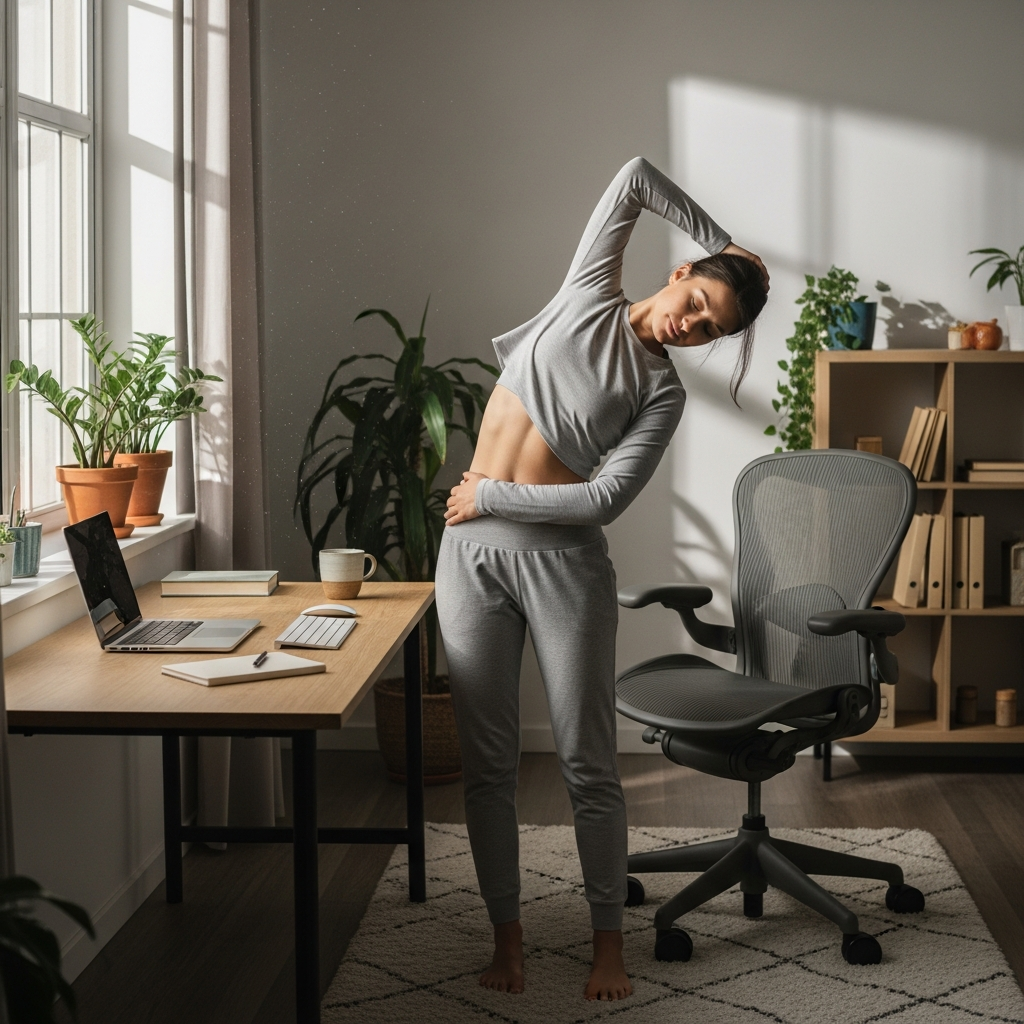
Thoracic Mobility Exercises: Fix Mid-Back Stiffness from Sitting
Do you spend hours hunched over a computer, only to feel that familiar ache in your mid-back? You’re not alone. Research shows that up to 80% of desk workers experience back pain, with thoracic spine stiffness being one of the most common complaints. This mid-back region, spanning from your neck to your lower back, becomes rigid from prolonged sitting and poor posture. The good news is that targeted thoracic mobility exercises can help reverse this stiffness and restore comfortable movement.
When you sit for extended periods, your thoracic spine loses its natural curvature and mobility. This can lead to a cascade of issues including poor posture, reduced breathing capacity, and increased strain on your neck and lower back. Many office workers also develop related conditions like sciatica from prolonged sitting, making comprehensive back care essential.
This guide provides specific exercises designed for desk workers. You’ll learn practical movements that can be done at your desk or at home. These exercises focus on restoring mid back mobility and improving your overall posture. With consistent practice, you may experience significant relief from upper back pain and stiffness.
Understanding Thoracic Spine Stiffness
The thoracic spine consists of twelve vertebrae located between your cervical (neck) and lumbar (lower back) regions. Unlike other spinal sections, it has limited rotation but significant extension and flexion capabilities. This area also connects to your rib cage, making it crucial for breathing mechanics.
Desk work creates several challenges for thoracic health. First, forward head posture places excessive strain on the mid-back. Second, rounded shoulders shorten chest muscles while weakening upper back muscles. Third, limited movement throughout the workday allows stiffness to develop gradually.
According to the American Physical Therapy Association, poor thoracic mobility can contribute to:
- Reduced shoulder range of motion
- Increased neck tension and headaches
- Compromised breathing patterns
- Greater risk of injury during physical activities
The consequences extend beyond discomfort. Limited thoracic mobility forces your body to compensate elsewhere. Your neck and lower back may become hypermobile to make up for the stiff mid-back. This compensation pattern often leads to chronic pain in multiple areas.
Essential Thoracic Mobility Exercises
These foundational thoracic mobility exercises form the core of any effective mid-back routine. Perform them daily for best results, focusing on smooth, controlled movements rather than forcing range of motion.
Cat-Cow Stretch
This classic yoga pose gently mobilizes your entire spine. Start on hands and knees with wrists under shoulders and knees under hips. Inhale as you drop your belly toward the floor, lifting your head and tailbone (Cow position). Exhale as you round your spine toward the ceiling, tucking your chin to chest (Cat position). Repeat 10-15 times, moving with your breath.
Thoracic Extension on Foam Roller
Place a foam roller perpendicular to your spine at mid-back level. Support your head with interlaced fingers. Slowly roll back over the foam roller, allowing your spine to extend. Pause at tight spots and take deep breaths. This exercise helps counteract the forward flexion from sitting. Many people find this particularly helpful for relieving neck tension that leads to headaches.
Seated Thoracic Rotations
Sit tall in a chair with feet flat on the floor. Cross your arms over your chest. Slowly rotate your upper body to one side, keeping your hips facing forward. Hold for 2-3 breaths, then return to center and repeat on the other side. Perform 5-10 rotations per side.
Wall Angels
Stand with your back against a wall, feet about 6 inches away. Maintain contact with your lower back, mid-back, and head against the wall. Slowly slide your arms up the wall, keeping elbows and wrists in contact. This exercise improves shoulder mobility while encouraging proper thoracic positioning.
Child’s Pose with Side Reach
Start in a kneeling position, then sit back on your heels and fold forward. Walk your hands to one side, feeling a gentle stretch through your opposite side ribs and mid-back. Hold for 5 breaths, then walk hands to the other side. This addresses rotational stiffness common in desk workers.
Desk-Friendly Exercises for Office Workers
You don’t need special equipment or a yoga mat to improve your thoracic mobility at work. These office-appropriate exercises can be done discreetly throughout your workday.
Chair Thoracic Rotations
Sit toward the front of your chair with feet planted firmly. Place your right hand on your left knee. Use this leverage to gently rotate your upper body to the left. Hold for 15-30 seconds, breathing deeply into the stretch. Repeat on the other side. This simple movement helps maintain rotational mobility during long work sessions.
Desk Cat-Cow
While seated, place both hands on your desk. Inhale as you arch your back slightly, lifting your chest toward the desk. Exhale as you round your back, drawing your belly button toward your spine. Repeat 5-10 times. This seated version provides similar benefits to the floor version without leaving your workstation.
Seated Thoracic Extensions
Interlace your fingers behind your head, keeping elbows wide. Gently arch backward over your chair, focusing the movement in your mid-back rather than your lower back. Hold for 2-3 breaths, then return to neutral. This counteracts the forward flexion posture of computer work.
Shoulder Blade Squeezes
Sit tall and imagine squeezing a pencil between your shoulder blades. Hold for 5 seconds, then release. Repeat 10-15 times. This simple exercise strengthens the muscles that support good thoracic posture. It also complements computer wrist pain relief strategies by promoting better overall upper body alignment.
The Harvard Health Publishing emphasizes that brief movement breaks throughout the workday can significantly reduce musculoskeletal discomfort. Aim to perform one of these desk exercises every 30-60 minutes.
Creating a Progressive Routine
Consistency matters more than intensity when improving thoracic mobility. Start with a manageable routine and gradually increase frequency and difficulty.
Starting Point: The 5-Minute Daily Routine
Begin with this simple sequence each morning:
- Cat-Cow Stretch: 1 minute
- Seated Thoracic Rotations: 1 minute
- Wall Angels: 1 minute
- Shoulder Blade Squeezes: 1 minute
- Deep Breathing: 1 minute
This foundation establishes daily movement patterns. Focus on quality of movement rather than quantity. Pay attention to how your body feels during and after each exercise.
Progressing Your Practice
After 2-3 weeks of consistent practice, consider these progressions:
- Increase hold times from 15 to 30 seconds
- Add resistance with light weights or resistance bands
- Incorporate more challenging variations like thoracic extensions over a stability ball
- Add rotational movements with controlled resistance
Incorporating Movement into Your Workday
Set reminders to move every 30-60 minutes. Use these breaks for:
- 2 minutes of desk exercises
- A brief walk around your workspace
- Stretching in a private area if available
- Deep breathing to reset posture
Research from the Mayo Clinic suggests that regular movement breaks are more effective for preventing back pain than occasional intense exercise sessions.
Complementary Practices for Better Posture
While thoracic mobility exercises are crucial, they work best within a comprehensive approach to posture and movement.
Ergonomic Adjustments
Proper workstation setup supports thoracic health. Ensure your monitor is at eye level to prevent forward head posture. Your chair should support your natural spinal curves. Elbows should rest comfortably at 90-degree angles when typing.
Movement Variety
Incorporate different types of movement throughout your week. Walking, swimming, and gentle yoga can complement your thoracic mobility work. These activities encourage full-body movement patterns that counteract the static positions of desk work.
Breathing Awareness
Thoracic stiffness often restricts breathing. Practice diaphragmatic breathing by placing one hand on your chest and one on your belly. Breathe deeply so your belly hand rises more than your chest hand. This encourages proper rib cage movement and thoracic mobility.
Strengthening Supporting Muscles
While mobility work addresses stiffness, strengthening exercises provide stability. Focus on:
- Upper back muscles (rhomboids, lower trapezius)
- Core muscles for spinal support
- Gluteal muscles for pelvic stability
Conclusion: Reclaim Your Mid-Back Mobility
Thoracic spine stiffness doesn’t have to be an inevitable consequence of desk work. With consistent practice of targeted exercises, you can maintain comfortable movement and better posture. Remember these key takeaways:
- Start small with 5-minute daily routines and build consistency
- Move frequently throughout your workday with desk-friendly exercises
- Focus on quality of movement rather than forcing range of motion
- Address related areas like neck tension and wrist discomfort
- Be patient – mobility improvements develop gradually over weeks
Your commitment to thoracic mobility exercises today can lead to lasting comfort and better movement patterns. Share this guide with colleagues who might benefit, and consider exploring complementary resources like shoulder impingement exercises for comprehensive upper body care.
Remember that consistency with these thoracic mobility exercises matters more than perfection. Even small, regular efforts can yield significant improvements in how your mid-back feels and functions.
Medical Disclaimer: This article is for informational purposes only and does not constitute medical advice. Always consult a qualified healthcare provider before making changes to your health routine or if you have specific medical concerns.