
Proper Breathing Exercise: A Complete Guide for Maximum Workout Benefits
Did you know that up to 80% of exercisers breathe incorrectly during workouts? This common mistake can sabotage your performance and increase injury risk. Many people focus on form and weight but neglect their proper breathing exercise technique. However, mastering your breath can transform your workouts from frustrating to fantastic.
Improper breathing reduces oxygen delivery to muscles, limits endurance, and compromises core stability. The good news? Learning correct breathing patterns is simpler than you think. This comprehensive guide provides step-by-step instructions for every exercise type. You’ll discover how to breathe properly during weight lifting, running, and recovery activities.
The Science Behind Proper Breathing Exercise
Understanding why breathing matters helps motivate consistent practice. Your breathing technique directly impacts workout performance and safety. Research from the American Council on Exercise shows that correct breathing can improve exercise efficiency by up to 25%.
Oxygen delivery is the most obvious benefit. Your muscles need oxygen to produce energy during exercise. Proper breathing ensures maximum oxygen intake and carbon dioxide removal. This process fuels your workouts and delays fatigue.
Core stability depends heavily on breathing patterns. Your diaphragm and abdominal muscles work together to stabilize your spine. Correct breathing creates intra-abdominal pressure that protects your back during heavy lifts. This is especially important for balance and stability training.
Blood pressure regulation is another crucial factor. Holding your breath during exertion can cause dangerous blood pressure spikes. Consistent breathing helps maintain safe cardiovascular responses to exercise stress.
Master the Basics: Diaphragmatic Breathing Techniques
Before tackling specific exercises, learn foundational breathing. Diaphragmatic breathing forms the basis of all effective workout breathing patterns. This technique engages your diaphragm fully for maximum oxygen exchange.
Featured Snippet Answer: Proper breathing during exercise involves inhaling through your nose during the easier phase and exhaling through your mouth during the exertion phase. For strength training, exhale during the lift and inhale during the lowering. For cardio, maintain rhythmic breathing that matches your movement pattern.
Step-by-Step Diaphragmatic Breathing Practice
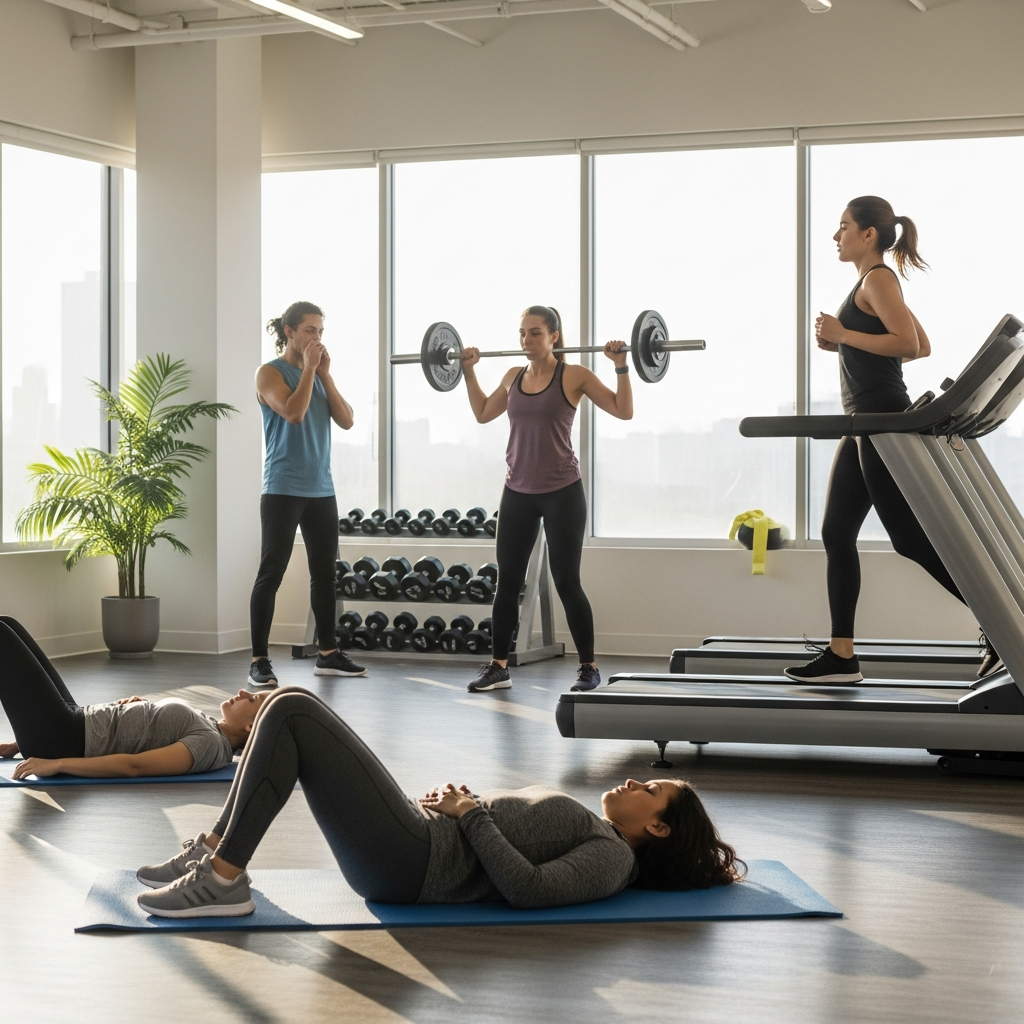
- Lie on your back with knees bent and feet flat
- Place one hand on your chest and the other on your abdomen
- Inhale slowly through your nose for 4 seconds
- Feel your abdomen rise while your chest remains still
- Exhale slowly through pursed lips for 6 seconds
- Repeat for 5-10 minutes daily until it becomes natural
Practice this technique before applying it to workouts. The Mayo Clinic Exercise Guidelines recommend mastering diaphragmatic breathing as a foundation for safe exercise.
How to Breathe Properly During Weight Lifting
Strength training requires specific breathing patterns for safety and effectiveness. The most common question beginners ask is how to breathe properly during weight lifting. The answer follows a simple principle: exhale during exertion, inhale during release.
The Valsalva Maneuver (When to Use It)
Advanced lifters sometimes use the Valsalva maneuver for heavy lifts. This involves taking a deep breath and holding it during the exertion phase. However, this technique should only be used for maximal lifts with proper supervision. For most exercises, continuous breathing is safer.
Breathing Patterns for Common Strength Exercises
- Squats: Inhale while descending, exhale while standing up
- Bench Press: Inhale while lowering the bar, exhale while pressing up
- Deadlifts: Inhale before the lift, exhale during the upward movement
- Rows: Exhale while pulling weight toward you, inhale while releasing
Proper breathing enhances proprioception and body awareness during strength movements. This connection helps maintain proper form throughout your sets.
Best Breathing Technique for Running Beginners
Cardiovascular exercise requires rhythmic breathing patterns. New runners often struggle with side stitches and early fatigue. Learning the best breathing technique for running beginners can prevent these common issues.
The 3:2 Breathing Ratio
This popular technique involves inhaling for three steps and exhaling for two steps. The uneven ratio ensures you exhale on alternating feet. This distributes impact stress evenly across both sides of your body.
Nasal vs. Mouth Breathing
Many experts recommend inhaling through your nose and exhaling through your mouth. Nasal breathing filters air and increases nitric oxide production. However, during intense running, mouth breathing becomes necessary for sufficient oxygen intake.
Progressive Breathing Practice for Runners
- Start with walking while practicing your breathing ratio
- Progress to slow jogging while maintaining the pattern
- Increase speed gradually as breathing becomes automatic
- Adjust ratios based on intensity (2:1 for sprints, 4:3 for easy runs)
Consistent breathing helps maintain pace and prevents hyperventilation. The National Academy of Sports Medicine emphasizes rhythmic breathing for cardiovascular efficiency.
Breathing for Flexibility and Active Recovery
Flexibility training and recovery periods benefit from specific breathing approaches. Yoga, stretching, and active recovery sessions use breath to enhance relaxation and range of motion.
Yoga Breathing Principles
Most yoga styles coordinate movement with breath. Generally, you inhale during expansive movements and exhale during compressive movements. This synchronization creates a meditative flow that reduces stress hormones.
Stretching and Breath Awareness
During static stretching, use deep breathing to relax into positions. Inhale to prepare, then exhale as you gently deepen the stretch. Never hold your breath while stretching, as this increases muscle tension.
Proper breathing during recovery helps address postural issues like upper crossed syndrome. Deep breathing opens the chest and corrects rounded shoulder patterns common in desk workers.
Common Breathing Mistakes and How to Fix Them
Even experienced exercisers make breathing errors. Recognizing these mistakes is the first step toward correction. Let’s address the question: should you hold your breath during exercise?
Mistake #1: Breath Holding
Many people unconsciously hold their breath during challenging exercises. This dangerous habit increases blood pressure and reduces oxygen delivery. The fix: Practice counting your breaths aloud during workouts until breathing becomes automatic.
Mistake #2: Shallow Chest Breathing
Rapid, shallow breaths from the chest limit oxygen intake. This pattern often leads to early fatigue. The fix: Place a hand on your abdomen during warm-ups to ensure diaphragmatic engagement.
Mistake #3: Irregular Rhythms
Inconsistent breathing disrupts movement patterns and reduces efficiency. The fix: Use metronome apps or music with consistent beats to establish rhythmic breathing.
Quick Fix Checklist
- ✅ Never hold your breath during exertion
- ✅ Practice diaphragmatic breathing daily
- ✅ Match breathing patterns to movement phases
- ✅ Adjust breathing ratios for exercise intensity
- ✅ Listen to your body’s breathing cues
Conclusion: Breathe Your Way to Better Workouts
Mastering proper breathing exercise techniques transforms your fitness journey. These simple adjustments yield significant benefits for performance, safety, and enjoyment. Remember these key takeaways:
- Diaphragmatic breathing forms the foundation for all exercise types
- Exhale during exertion phases and inhale during release phases
- Rhythmic breathing patterns prevent fatigue and improve efficiency
- Never hold your breath during challenging movements
- Practice breathing techniques separately before applying to workouts
Start implementing one breathing technique this week. Notice how proper breathing enhances your energy, focus, and results. Share your experiences in the comments below or pass this guide to a workout partner who struggles with breathing.
Your journey toward better breathing begins with awareness. Each conscious breath brings you closer to your fitness goals while protecting your long-term health.
Medical Disclaimer: This article is for informational purposes only and does not constitute medical advice. Always consult a qualified healthcare provider before making changes to your health routine or if you have specific medical concerns.