
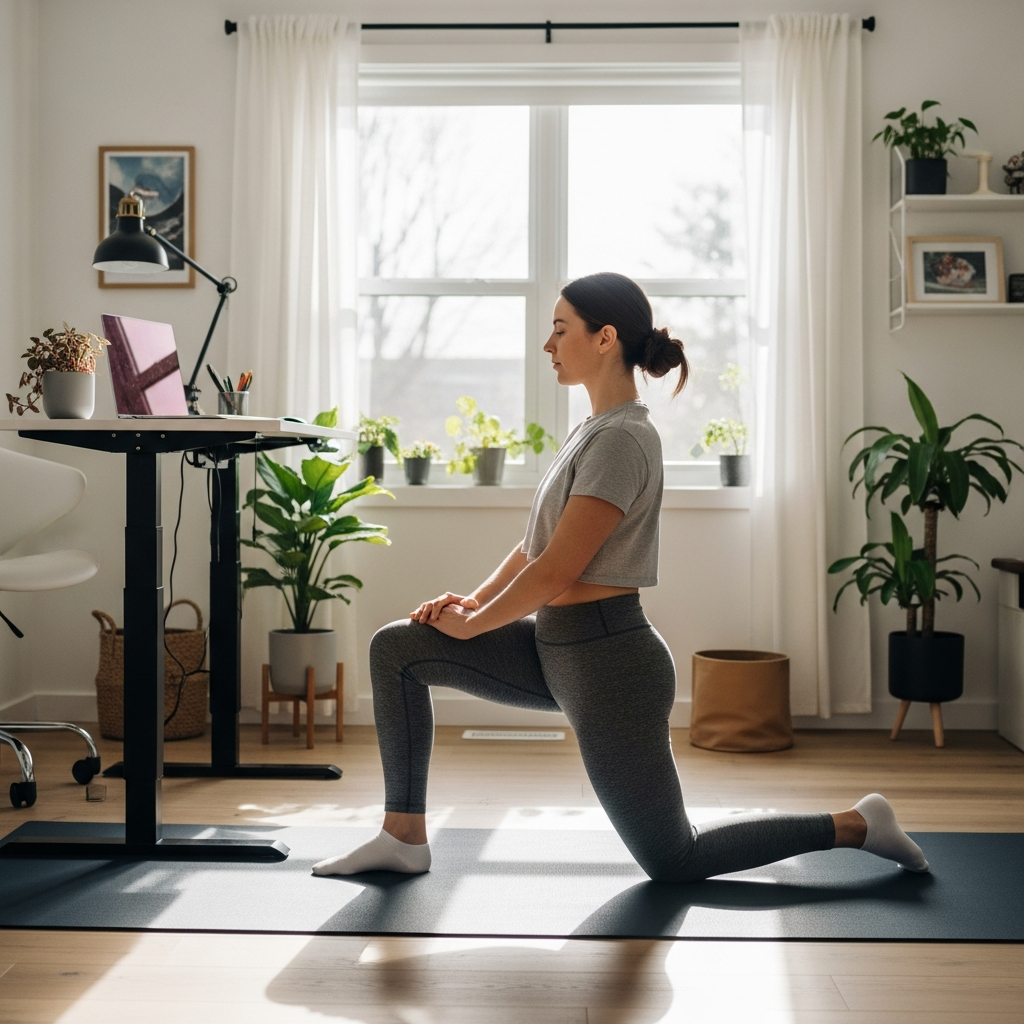
Hip Flexor Muscles: Fix Tight Hips from Sitting All Day
Do you spend most of your day sitting at a desk? You’re not alone. The average office worker sits for 8-10 hours daily, and this sedentary lifestyle takes a serious toll on your body. Specifically, your hip flexor muscles bear the brunt of this inactivity. These crucial muscles become shortened, tight, and painful when you sit for extended periods.
Many people experience stiffness when standing up, lower back pain, or difficulty with activities like walking or climbing stairs. These symptoms often stem from tight hip flexors. The good news? You can reverse this damage with targeted exercises and lifestyle adjustments.
This comprehensive guide will show you exactly how to fix tight hips from sitting all day. You’ll learn about your hip flexor anatomy, discover effective stretches, and implement a progressive routine designed specifically for office professionals. Let’s get started on your journey to pain-free movement.
Understanding Your Hip Flexor Muscles
Your hip flexor muscles are a group of muscles located at the front of your hip joint. They play a crucial role in everyday movements like walking, running, and climbing stairs. The primary hip flexors include the iliopsoas (made up of the iliacus and psoas major), rectus femoris, sartorius, and tensor fasciae latae.
The psoas muscle is particularly important. It connects your lumbar spine to your femur, acting as a bridge between your upper and lower body. When healthy, these muscles provide stability and mobility. However, prolonged sitting causes them to remain in a shortened position, leading to tightness and weakness.
According to the Mayo Clinic, tight hip flexors can contribute to various issues including lower back pain, poor posture, and reduced range of motion. Understanding this anatomy helps you target the right areas during your stretching routine.
Why Sitting is the Enemy of Hip Health
Sitting for long periods creates a perfect storm for hip problems. When you sit, your hip flexors remain in a shortened position for hours. This constant contraction causes them to adapt by becoming shorter and tighter. Over time, this tightness can pull your pelvis forward, creating what’s known as anterior pelvic tilt.
This postural change doesn’t just affect your hips. It creates a chain reaction throughout your body. Tight hip flexors can lead to:
- Lower back pain from increased lumbar curve
- Reduced hip extension during walking
- Compromised glute activation
- Increased risk of hip joint injuries
The National Institute of Arthritis notes that maintaining hip flexibility is crucial for preventing osteoarthritis and other degenerative conditions. Regular movement breaks and targeted stretching can counteract these negative effects.
Essential Hip Flexor Stretches for Desk Workers
Now let’s get practical with specific hip flexor stretches you can do at your desk or at home. These exercises target the tight areas caused by prolonged sitting. Remember to breathe deeply during each stretch and never push to the point of pain.
1. Kneeling Hip Flexor Stretch
This classic stretch directly targets your psoas muscle. Here’s how to do it properly:
- Kneel on a soft surface with one knee down and the other foot forward
- Keep your back straight and engage your core
- Gently push your hips forward until you feel a stretch in the front of your hip
- Hold for 30 seconds, then switch sides
- Repeat 2-3 times per side
This stretch is particularly effective for how to stretch hip flexors safely. If you experience knee discomfort, place a cushion under your kneeling knee.
2. Standing Psoas Stretch
Perfect for office breaks, this standing variation requires minimal space:
- Stand with feet hip-width apart
- Step one foot back into a slight lunge position
- Keep your back straight and tuck your pelvis slightly
- You should feel the stretch in the front of your back hip
- Hold for 20-30 seconds per side
This psoas stretch helps counteract the forward-leaning posture many desk workers develop. Combine it with regular breaks from sitting for maximum benefit.
3. Butterfly Stretch for Inner Hip Muscles
While not a traditional hip flexor stretch, this exercise addresses tightness in surrounding muscles that contribute to overall hip discomfort:
- Sit on the floor with the soles of your feet together
- Let your knees fall outward naturally
- Gently press your knees toward the floor with your elbows
- Hold for 30-45 seconds, breathing deeply
This stretch complements your hip flexor exercises by addressing tight adductors that often accompany hip flexor issues.
Progressive Exercise Routine for Office Professionals
A structured approach yields better results than random stretching. This progressive routine builds flexibility safely over time. Start with Level 1 and advance as your mobility improves.
Level 1: Foundation Building (Weeks 1-2)
Focus on gentle stretching and movement breaks:
- Perform 3 desk stretches every hour
- Take a 5-minute walk every 90 minutes
- Do 10 minutes of gentle stretching before bed
- Focus on breathing and proper form
Level 2: Strength Integration (Weeks 3-4)
Add strengthening exercises to support your stretching:
- Include glute bridges and clamshells
- Add resistance band exercises for hip mobility
- Increase stretch duration to 45 seconds
- Begin incorporating standing desk time
Level 3: Advanced Mobility (Weeks 5+)
Challenge your range of motion with deeper stretches:
- Try advanced variations like the couch stretch
- Incorporate yoga poses like pigeon pose
- Add dynamic stretching to your warm-up
- Maintain consistency with daily practice
This progressive approach helps prevent hip flexor pain from overstretching while building sustainable flexibility.
Preventing Hip Pain and Injury
Prevention is always better than treatment. Incorporate these habits into your daily routine to maintain healthy hip muscles:
Desk Setup Optimization
Your workstation significantly impacts your hip health. Ensure your chair height allows your feet to rest flat on the floor with knees at 90 degrees. Your monitor should be at eye level to prevent leaning forward, which exacerbates forward head posture and related hip issues.
Movement Breaks Strategy
Set reminders to move every 30-60 minutes. Even brief movement breaks make a difference. Try the 20-20-20 rule: every 20 minutes, stand for 20 seconds and look at something 20 feet away. Add gentle stretching during these breaks.
Posture Awareness
Regularly check your sitting posture. Your ears should align with your shoulders, and your shoulders should align with your hips. Avoid crossing your legs, as this can create muscle imbalances. Use a lumbar support if needed to maintain proper spinal alignment.
The American Academy of Orthopaedic Surgeons recommends regular exercise and proper ergonomics as key strategies for preventing hip problems related to sedentary lifestyles.
When to Seek Professional Help
While most hip joint pain stretching exercises are safe for home practice, certain symptoms warrant professional attention. Consult a healthcare provider if you experience:
- Sharp, shooting pain during stretching
- Pain that radiates down your leg
- Swelling or warmth around the hip joint
- Difficulty bearing weight on the affected side
- Symptoms that worsen despite consistent stretching
These could indicate more serious conditions requiring therapy for hip flexor injury or other medical interventions. A physical therapist can provide personalized exercises and manual therapy tailored to your specific needs.
Remember that gradual improvement is normal. It may take several weeks of consistent practice to notice significant changes in your hip flexibility. Be patient with your body and celebrate small victories along the way.
Conclusion: Your Path to Flexible, Pain-Free Hips
Fixing tight hips from sitting all day is achievable with consistent effort. Your hip flexor muscles can regain their natural length and function through targeted stretching and lifestyle adjustments. Here are the key takeaways:
- Understand the anatomy: Knowing which muscles are affected helps you target them effectively
- Be consistent: Daily stretching yields better results than occasional intense sessions
- Move regularly: Break up sitting time with frequent movement breaks
- Progress gradually: Increase stretch intensity and duration slowly over time
- Listen to your body: Distinguish between productive stretching discomfort and harmful pain
Start implementing these strategies today. Your future self will thank you for the improved mobility and reduced pain. Share this guide with colleagues who might benefit from these exercises. Together, we can combat the negative effects of desk jobs on our bodies.
Have you tried any of these stretches? Share your experiences in the comments below. If you’re also dealing with rounded shoulders from computer work, check out our guide on correcting that common posture issue too.
Medical Disclaimer: This article is for informational purposes only and does not constitute medical advice. Always consult a qualified healthcare provider before making changes to your health routine or if you have specific medical concerns.