Forest Bathing for Stress Relief: The Science-Backed Guide to Shinrin-Yoku
Do you feel constantly overwhelmed by notifications, deadlines, and the relentless pace of modern life? You’re not alone. Research shows that 77% of people regularly experience physical symptoms caused by stress, and 73% experience psychological symptoms. If you’re searching for a natural, evidence-based way to calm your nervous system, forest bathing stress relief might be exactly what you need.
Forest bathing, known as shinrin-yoku in Japanese, isn’t about getting clean or taking a swim. It’s a mindful practice of immersing yourself in nature to promote healing and reduce stress. This ancient practice has been scientifically validated by modern research, showing measurable reductions in cortisol levels, blood pressure, and anxiety. If you’re already familiar with mindfulness meditation techniques, you’ll find forest bathing to be a beautiful extension of those principles into the natural world.
This comprehensive guide will walk you through everything you need to know about forest bathing for stress relief. You’ll learn the science behind why it works, discover practical techniques you can use today, and find solutions for practicing nature therapy even in urban environments.
What is Forest Bathing? Understanding Shinrin-Yoku
Forest bathing originated in Japan in the 1980s as a response to the country’s tech boom and rising stress levels. The Japanese Ministry of Agriculture, Forestry and Fisheries coined the term “shinrin-yoku,” which translates to “taking in the forest atmosphere” or “forest bathing.” Unlike hiking or exercise-focused outdoor activities, forest bathing emphasizes mindfulness in nature.
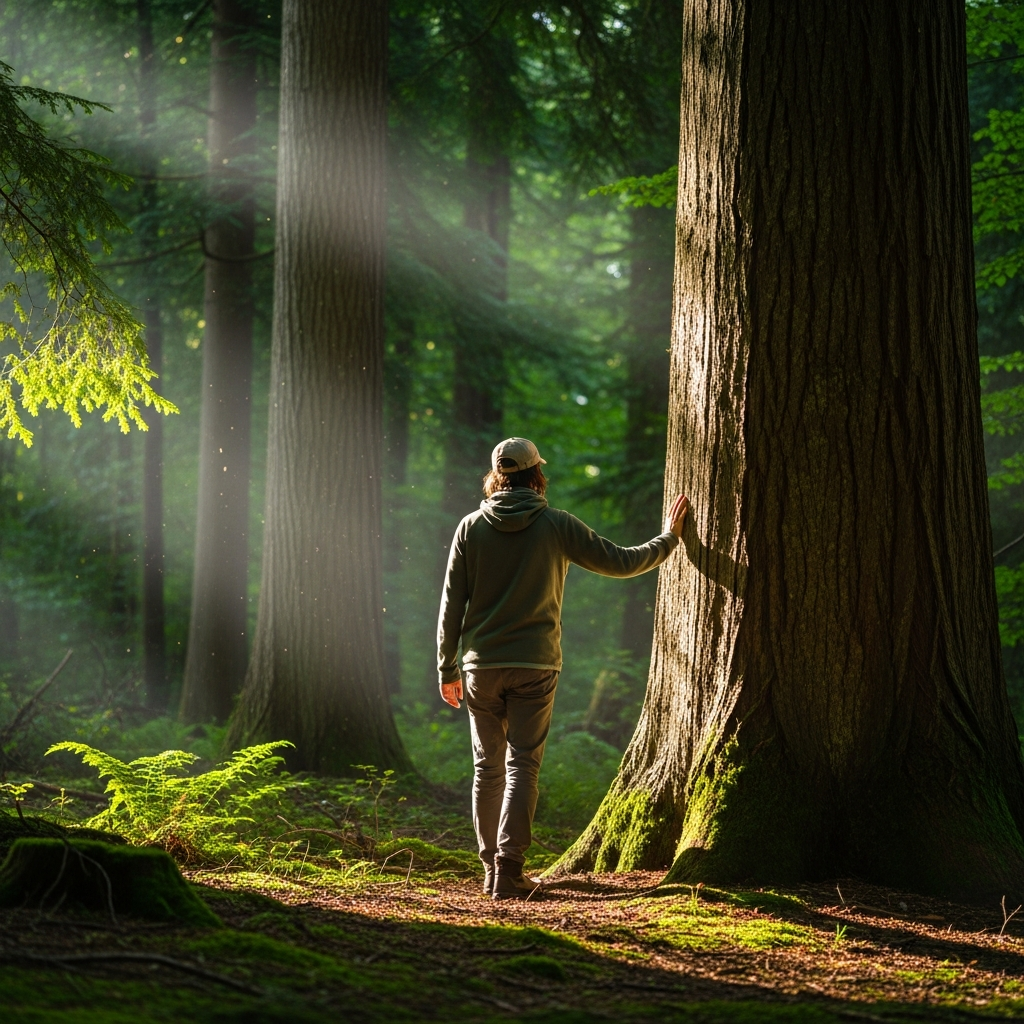
The practice involves slowly walking through a forest or natural area while consciously engaging all five senses. You’re not trying to reach a destination or achieve a fitness goal. Instead, you’re simply being present with the natural environment around you.
Key Principles of Forest Bathing
- Slow movement: Walking at a leisurely pace, often stopping to observe
- Sensory engagement: Noticing sights, sounds, smells, textures, and even tastes
- Present moment awareness: Letting go of thoughts about past or future
- Non-judgmental observation: Simply noticing without labeling or analyzing
This practice differs from traditional outdoor activities because the goal isn’t physical exertion. It’s about forest therapy – allowing nature to work its healing magic on your nervous system.
The Science Behind Forest Bathing Stress Relief
You might wonder: does forest bathing really reduce stress? The answer comes from decades of scientific research. Studies from the NIH Forest Therapy Research show that spending time in forests can lower cortisol levels by 12-15% compared to urban environments.
The Japanese Society of Forest Medicine has conducted extensive research on shinrin-yoku. Their findings reveal multiple physiological benefits:
- Reduced cortisol: The primary stress hormone decreases significantly
- Lower blood pressure: Both systolic and diastolic readings improve
- Improved heart rate variability: Indicates better stress resilience
- Enhanced immune function: Natural killer cell activity increases
According to the American Psychological Association Nature Benefits research, nature exposure helps reduce rumination – the repetitive negative thinking associated with anxiety and depression. The combination of phytoncides (natural compounds released by trees), negative ions, and the calming visual patterns of nature creates a powerful stress reduction effect.
If you’re looking for additional stress and tension relief techniques, forest bathing offers a complementary approach that works with your body’s natural healing systems.
How to Practice Forest Bathing: A Step-by-Step Guide
Ready to experience forest bathing for yourself? Here’s a simple, evidence-based protocol you can follow. Remember, the goal isn’t perfection – it’s presence.
Step 1: Choose Your Location
Find a natural area with trees. This could be a forest, park, or even a tree-lined neighborhood. The ideal spot has minimal human-made noise and allows you to walk slowly without obstacles.
Step 2: Leave Distractions Behind
Turn your phone to airplane mode or leave it in your car. The goal is to disconnect from technology and reconnect with nature.
Step 3: Set Your Intention
Take a moment to set a simple intention: “I am here to be present with nature” or “I am open to whatever I experience.”
Step 4: Begin Your Sensory Walk
Start walking slowly, much slower than your normal pace. There’s no destination or time pressure.
Step 5: Engage Your Five Senses
- Sight: Notice colors, patterns, light filtering through leaves
- Sound: Listen to birds, wind, rustling leaves, water if present
- Smell: Breathe in the scent of soil, trees, flowers
- Touch: Feel bark textures, leaves, moss, or soil
- Taste: If safe, taste clean air or edible plants you can identify
Step 6: Practice Mindful Breathing
Periodically stop and take several deep breaths. Inhale slowly through your nose, exhale through your mouth. Notice how the air feels different in nature.
Step 7: Close Your Practice
After 20-60 minutes, take a moment to acknowledge your experience. You might offer silent thanks to the natural world before returning to your daily life.
Forest Bathing Techniques for Urban Dwellers
What if you live in a city without easy access to forests? You can still practice modified forms of nature therapy. Urban forest bathing adapts the principles to city environments.
Urban Adaptation Techniques
- Park immersion: Even small city parks can provide nature connection
- Tree observation: Focus on individual trees along streets
- Window nature: Create a nature-focused view with plants
- Soundscapes: Listen to nature sounds if real nature isn’t accessible
Research shows that even brief exposures to nature can provide benefits. A 20-minute visit to a park can significantly improve well-being. Combine your forest bathing practice with other healthy habits like walking after eating to create a holistic wellness routine.
For those dealing with anxiety, combining forest bathing with grounding techniques for anxiety can create a powerful stress-reduction toolkit. Both practices help bring you into the present moment and calm an overactive nervous system.
Maximizing the Benefits: Tips for Effective Practice
To get the most from your forest bathing experience, consider these evidence-based recommendations:
Frequency and Duration
Research suggests that 20-30 minutes, 2-3 times per week provides optimal benefits. However, even a single 10-minute session can reduce stress markers. Consistency matters more than duration.
Seasonal Considerations
Each season offers unique sensory experiences:
– Spring: New growth, bird songs, floral scents
– Summer: Full canopy, dappled light, warm air
– Fall: Color changes, crunching leaves, crisp air
– Winter: Bare branches, snow patterns, quiet atmosphere
Weather Adaptations
Don’t let weather stop you. Rain brings different sounds and smells. Fog creates mystery. Sunshine offers warmth. Dress appropriately and embrace whatever conditions nature provides.
Mindset Matters
Approach forest bathing with curiosity rather than expectation. Each experience will be different. Some days you might feel deeply relaxed; other days your mind might wander. Both are valid experiences.
Common Questions About Forest Bathing
How to practice forest bathing for anxiety?
For anxiety relief, focus on the sensory aspects. When anxious thoughts arise, gently bring your attention back to what you can see, hear, smell, or feel in the present moment. The combination of nature exposure and mindfulness helps break the cycle of anxious thinking.
Does forest bathing really reduce stress?
Yes, multiple studies confirm this. A 2019 meta-analysis of 20 studies found consistent reductions in cortisol, blood pressure, and self-reported stress levels following forest bathing sessions. The effects are both immediate and cumulative with regular practice.
Forest bathing techniques for beginners
Start simple. Your first session might be just 10 minutes in a local park. Focus on one sense at a time. Don’t worry about “doing it right” – there’s no wrong way to be present in nature. The key is regular practice rather than perfect technique.
Can I practice alone?
Absolutely. Solo practice allows for deeper introspection. However, guided sessions or practicing with a friend can also be valuable, especially when starting. Choose what feels right for you.
Conclusion: Your Journey to Natural Stress Relief
Forest bathing offers a scientifically validated path to forest bathing stress relief that’s accessible to almost everyone. By incorporating this practice into your life, you’re not just reducing stress – you’re building a deeper connection with the natural world that sustains us all.
Key Takeaways:
- Forest bathing reduces cortisol by 12-15% and lowers blood pressure
- Even urban dwellers can adapt the practice to city environments
- Regular short sessions (20-30 minutes) provide cumulative benefits
- The practice combines nature exposure with mindfulness principles
- Each season offers unique sensory experiences worth exploring
Start your forest bathing journey today. Visit a local park, leave your phone behind, and simply be present with nature. Notice how you feel during and after your practice. As you develop this habit, you’ll likely find it becomes an essential part of your emotional resilience building toolkit.
Remember that like any wellness practice, forest bathing works best when combined with other healthy habits. Listen to your body, be consistent, and allow nature to work its gentle healing magic on your nervous system.
Medical Disclaimer: This article is for informational purposes only and does not constitute medical advice. Always consult a qualified healthcare provider before making changes to your health routine or if you have specific medical concerns.