
Fix Tight Calves: 7 Science-Backed Steps for Better Mobility
Do you wake up with stiff calves or feel that familiar tightness after sitting at your desk all day? You’re not alone. Research from the National Institutes of Health suggests up to 70% of adults experience calf tightness regularly. This common issue affects everyone from office workers to marathon runners. Learning how to fix tight calves is essential for maintaining mobility and preventing related problems.
Calf tightness can lead to plantar fasciitis, Achilles tendonitis, and even knee or hip pain. The good news? You don’t need expensive treatments or complicated routines. This guide provides 7 science-backed steps to restore flexibility and function. Whether you’re dealing with post-run soreness or desk-induced stiffness, these techniques can help.
Understanding Calf Tightness: More Than Just Sore Muscles
Your calves consist of two main muscles: the gastrocnemius and soleus. The gastrocnemius gives your calf its shape, while the soleus lies deeper. Both muscles work together when you walk, run, or stand. Calf muscle tightness often develops from several factors.
Common Causes of Tight Calves
Prolonged sitting shortens calf muscles over time. Improper footwear, especially high heels or unsupportive shoes, contributes to the problem. Overuse from running or jumping without proper recovery is another factor. Dehydration and electrolyte imbalances can cause muscle cramping and tightness.
Muscle imbalances throughout your kinetic chain also play a role. When other muscles are weak or tight, your calves compensate. This creates excessive strain on already overworked muscles. Understanding these causes helps you address the root issues, not just the symptoms.
Step 1: Assess Your Current Calf Mobility
Before starting any program, assess your current mobility. This helps track progress and identify potential issues. Two simple tests can give you valuable information about your calf tightness relief needs.
The Wall Test
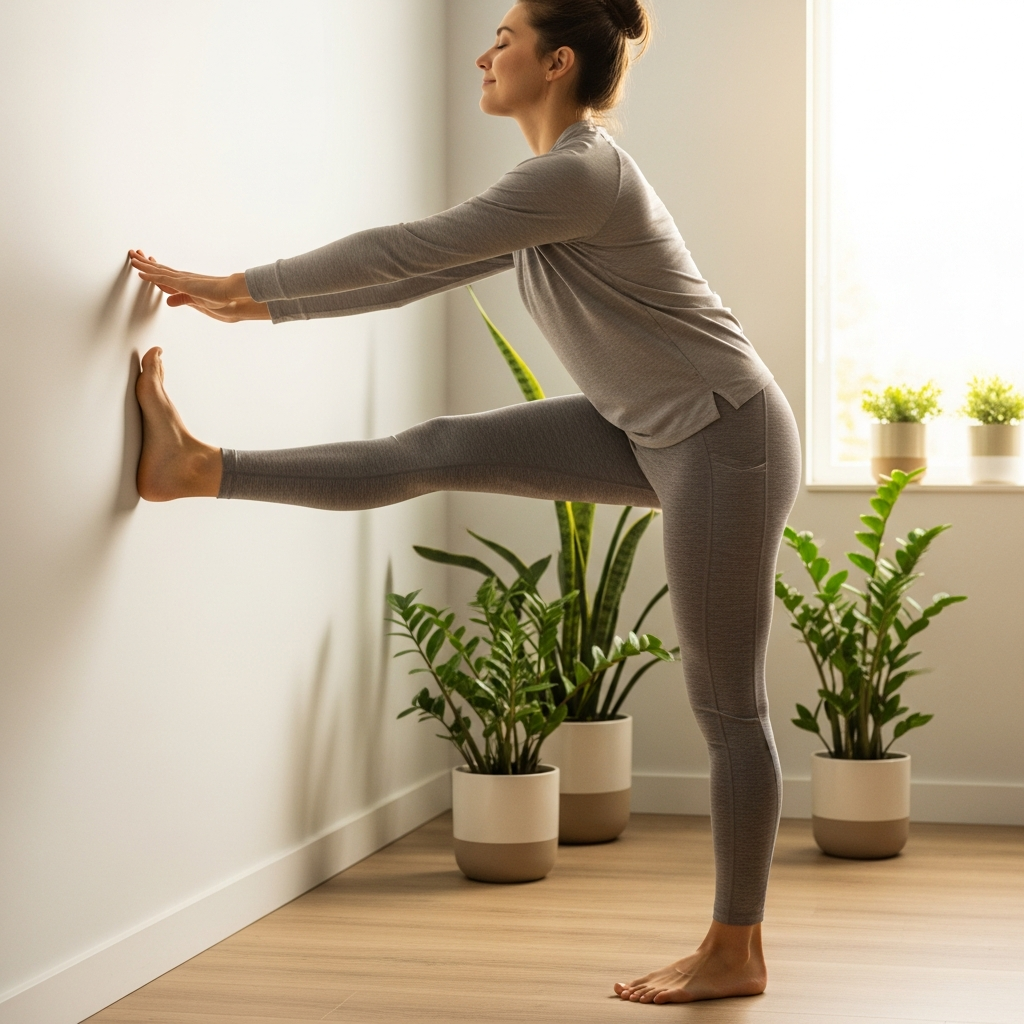
Stand facing a wall with one foot forward. Keep your back heel flat on the ground. Slowly lean forward until you feel a stretch in your back calf. Measure the distance from your toes to the wall. Compare both sides for differences. Limited range may indicate tightness needing attention.
The Squat Test
Try squatting with your heels flat on the ground. If your heels lift or you can’t maintain balance, calf tightness could be the culprit. This test also reveals potential connections to plantar fasciitis relief needs. Always consult a healthcare provider if you experience sharp pain during these tests.
Step 2: The Science of Dynamic Warm-ups
Research in the Journal of Sports Science & Medicine shows dynamic stretching improves performance and reduces injury risk. Unlike static stretching, dynamic movements prepare muscles for activity. They increase blood flow and range of motion gradually.
Effective Dynamic Calf Exercises
- Walking Heel Raises: Take 10-15 steps lifting onto your toes with each step.
- Leg Swings: Hold onto a wall and swing one leg forward and back 10-15 times.
- Ankle Circles: Rotate each ankle clockwise and counterclockwise 10 times.
- Walking Lunges: Incorporate gentle lunges to engage multiple muscle groups.
Perform these before workouts or on days when you’ll be standing a lot. They’re particularly helpful for runners wondering how to fix tight calves from running. Dynamic warm-ups also benefit those with tight hamstrings, as these muscle groups often work together.
Step 3: Targeted Calf Stretching Techniques
Proper stretching is crucial for stretching tight calves effectively. Different techniques target specific calf muscles. The gastrocnemius responds best to straight-leg stretches. The soleus requires bent-knee positions for optimal stretching.
Best Stretches for Tight Calf Muscles
Here are three proven stretches for calf tightness relief:
- Wall Stretch (Gastrocnemius): Place hands on wall, step one foot back, keep heel down, and lean forward.
- Bent-Knee Stretch (Soleus): Similar to wall stretch but bend both knees slightly to target deeper muscle.
- Stair Stretch: Stand on edge of step, lower heels below step level for deep stretch.
Hold each stretch for 30 seconds, repeating 2-3 times per side. Breathe deeply and avoid bouncing. Consistency matters more than intensity. For comprehensive lower body care, combine with our ankle mobility guide.
Step 4: Strengthening for Balanced Support
Strong calves support better mobility and reduce tightness. Eccentric strengthening (lengthening under tension) is particularly effective. The American Academy of Orthopaedic Surgeons recommends this approach for tendon health.
Calf Mobility Exercises for Strength
- Eccentric Heel Drops: Stand on step, rise on both toes, then slowly lower on one foot.
- Resistance Band Exercises: Use bands for seated calf raises and ankle dorsiflexion.
- Single-Leg Balance: Stand on one foot for 30-60 seconds to improve stability.
- Calf Raises with Pause: Add a 2-second pause at the top of each raise.
Perform 2-3 sets of 10-15 repetitions, 2-3 times weekly. Gradually increase difficulty as strength improves. Balanced strength throughout your legs prevents compensation patterns that lead to tightness.
Step 5: Self-Massage and Myofascial Release
Myofascial release addresses connective tissue restrictions contributing to tight calf muscles. This technique can provide immediate relief and improve long-term flexibility. Several tools make self-treatment accessible.
Tools for Calf Muscle Tightness Relief
- Foam Roller: Roll calves slowly, pausing on tender spots for 30 seconds.
- Massage Ball: Target specific trigger points with a tennis or lacrosse ball.
- Percussion Massager: Use vibration therapy to increase blood flow.
- Manual Techniques: Use thumbs to apply pressure along muscle fibers.
Spend 2-5 minutes per calf, focusing on areas of greatest tension. Breathe through discomfort but avoid sharp pain. Regular myofascial release complements stretching for comprehensive calf tightness relief.
Step 6: Lifestyle Adjustments for Desk Workers
If you sit for long periods, specific adjustments can prevent calf tightness. Simple changes throughout your day make significant differences. These strategies address the question: why are my calves always tight?
Desk-Friendly Solutions
- Frequent Movement Breaks: Stand and walk for 2-3 minutes every hour.
- Desk Stretches: Perform seated calf stretches while working.
- Proper Footwear: Choose supportive shoes, even when sitting.
- Hydration: Drink adequate water to prevent muscle cramping.
- Foot Positioning: Avoid pointing toes downward for extended periods.
Consider using a footrest or adjustable desk if possible. These small changes accumulate over time, reducing strain on your calf muscles. They’re especially important for those with sedentary jobs.
Step 7: Recovery and Maintenance Strategies
Consistent recovery prevents tightness from returning. Your body needs proper rest and nutrients to maintain flexibility. Implement these strategies to sustain your progress.
Long-Term Mobility Maintenance
- Sleep Quality: Aim for 7-9 hours nightly for muscle repair.
- Nutrition: Consume adequate magnesium, potassium, and protein.
- Consistent Routine: Perform mobility work 3-5 times weekly.
- Listen to Your Body: Adjust intensity based on daily needs.
- Cross-Training: Vary activities to prevent overuse patterns.
Recovery isn’t passive—it’s an active part of your fitness routine. Proper recovery allows your calves to adapt positively to stretching and strengthening. This completes your comprehensive approach to fix tight calves.
Conclusion: Your Path to Flexible, Pain-Free Calves
You now have a complete science-backed protocol to address calf tightness. These seven steps work together for comprehensive relief and improved mobility. Remember these key takeaways:
- Assess your mobility regularly to track progress
- Combine dynamic warm-ups with targeted stretching
- Strengthen calves eccentrically for balanced support
- Incorporate myofascial release into your routine
- Make lifestyle adjustments that support calf health
Start with one or two steps that address your most pressing needs. Gradually incorporate additional techniques as you progress. Consistency matters more than perfection. Share your journey in the comments below—we’d love to hear what works for you!
For comprehensive lower body care, explore our guide on tight hip flexors. Remember that your body works as an interconnected system. Addressing multiple areas often yields the best results for lasting mobility and comfort.
Medical Disclaimer: This article is for informational purposes only and does not constitute medical advice. Always consult a qualified healthcare provider before making changes to your health routine or if you have specific medical concerns.