
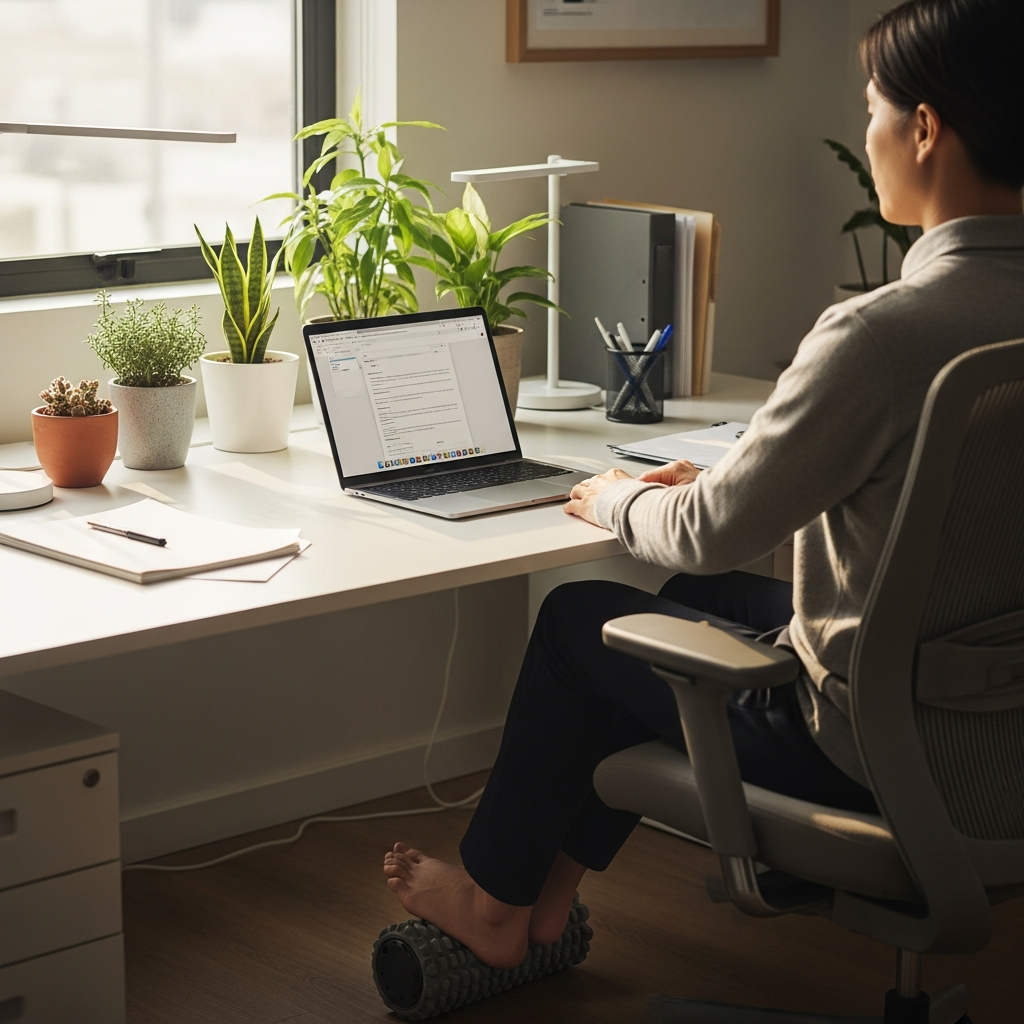
Desk Foot Exercises: Fix Posture from Ground Up for Office Workers
Did you know that the average office worker sits for approximately 6.5 hours per day? This sedentary lifestyle creates a cascade of postural problems that often start where you might least expect—in your feet. Weak foot muscles, poor arch support, and limited ankle mobility can silently sabotage your posture, leading to back pain, neck tension, and reduced productivity. The good news is that simple desk foot exercises can transform your workday experience. These targeted movements strengthen your foundation, improve alignment, and prevent the common aches associated with prolonged sitting. Whether you’re dealing with plantar fasciitis or simply want to maintain better posture, incorporating these exercises into your daily routine alongside a proper ergonomic workspace setup can make a significant difference in your overall comfort and health.
The Science Behind Foot Health and Posture
Your feet serve as the foundation of your entire musculoskeletal system. According to the American Podiatric Medical Association, each foot contains 26 bones, 33 joints, and more than 100 muscles, tendons, and ligaments. When these structures weaken from disuse during prolonged sitting, your body compensates with poor alignment that travels upward through your kinetic chain.
Research suggests that weak foot muscles contribute to several postural issues:
- Collapsed arches can lead to inward knee rotation
- Limited ankle mobility affects hip positioning
- Poor foot stability creates compensatory patterns in the spine
A study published in the Journal of Physical Therapy Science found that targeted foot strengthening exercises improved postural stability in office workers by 23% over eight weeks. This demonstrates how foot strengthening exercises directly impact your overall alignment and comfort during work hours.
Essential Desk Foot Exercises for Beginners
Starting with simple movements can help you build a solid foundation for better posture. These office posture exercises require no equipment and can be done discreetly at your desk. According to the National Institute for Occupational Safety and Health, regular micro-breaks for movement can significantly reduce musculoskeletal discomfort.
Toe Raises and Lowers
This basic exercise activates the muscles along your shins and improves ankle mobility:
- Sit with feet flat on the floor, knees bent at 90 degrees
- Slowly raise your toes while keeping heels planted
- Hold for 3 seconds, then lower toes back down
- Repeat 10-15 times, 2-3 sets per day
Arch Lifts
Strengthening your foot arches supports better weight distribution:
- Place feet flat with weight evenly distributed
- Without curling your toes, lift the arches of your feet
- Imagine creating space between the floor and your arch
- Hold for 5 seconds, release slowly
- Repeat 8-12 times per foot
These sitting foot stretches can help prevent the development of forward head posture by improving your overall body alignment from the ground up.
Advanced Foot Strengthening Techniques
Once you’ve mastered the basics, these more challenging exercises can further enhance your desk worker foot health. These movements target specific muscle groups that often weaken during prolonged sitting.
Towel Scrunches
This exercise strengthens the intrinsic foot muscles that support your arches:
- Place a small towel on the floor in front of your chair
- Using only your toes, scrunch the towel toward you
- Try to gather the entire towel under your foot
- Reverse the motion to push it away
- Complete 5-10 repetitions per foot
Alphabet Tracing
Improve ankle mobility and coordination with this creative exercise:
- Lift one foot slightly off the ground
- Using your big toe as a pointer, trace each letter of the alphabet
- Focus on smooth, controlled movements
- Complete the entire alphabet with each foot
These advanced techniques complement other office posture exercises and can help address muscular imbalances that contribute to conditions like upper crossed syndrome.
Creating a Daily Desk Foot Exercise Routine
Consistency is key when it comes to how to strengthen feet for better posture. Developing a simple routine that fits into your workday makes it easier to maintain these beneficial habits.
Morning Activation Sequence
Start your workday with these quick exercises:
- 2 minutes of toe raises and lowers
- 1 minute of arch lifts for each foot
- 30 seconds of ankle circles in both directions
Midday Maintenance Breaks
Set reminders for these brief movement breaks:
- Every hour: 10 towel scrunches per foot
- After lunch: Complete one alphabet tracing session
- Mid-afternoon: 2 minutes of seated calf stretches
End-of-Day Recovery
Wind down with these relaxing movements:
- 5 minutes of gentle foot rolling with a tennis ball
- 2 minutes of seated plantar fascia stretches
- 1 minute of deep breathing while focusing on foot relaxation
Pairing these desk exercises for foot pain relief with thoracic mobility exercises creates a comprehensive approach to workplace wellness.
Common Foot Problems for Desk Workers and Solutions
Understanding specific foot issues can help you target your exercise routine more effectively. Here are the most common problems and how desk foot exercises can help address them.
Plantar Fasciitis Prevention
Plantar fascia exercises can help prevent this painful condition:
- Seated calf stretches with a towel
- Toe extension stretches while sitting
- Gentle arch massage with a frozen water bottle
Flat Feet Support
Strengthening exercises for fallen arches:
- Marble pickups with your toes
- Short foot exercise (doming the arch)
- Resistance band ankle dorsiflexion
Swollen Ankles Reduction
Movement strategies to improve circulation:
- Ankle pumps throughout the day
- Calf raises while standing at your desk
- Elevated foot positioning during breaks
These best foot exercises for sitting all day address the specific challenges faced by office workers and can significantly improve comfort levels.
Integrating Foot Health into Your Overall Posture Strategy
Your feet don’t work in isolation—they’re part of a connected system. A holistic approach to posture considers how foot health interacts with other areas of your body.
The Kinetic Chain Connection
Understanding how foot position affects your entire body:
- Foot pronation can lead to knee valgus
- Limited ankle mobility contributes to hip tightness
- Poor foot stability affects spinal alignment
Complementary Exercises
Pair your desk foot exercises with these supporting movements:
- Hip flexor stretches to counter sitting posture
- Glute activation exercises to support proper alignment
- Core strengthening for overall stability
Ergonomic Considerations
Optimize your workspace for foot health:
- Use a footrest if your feet don’t reach the floor comfortably
- Choose shoes with proper arch support for work
- Consider anti-fatigue mats if you stand periodically
This integrated approach ensures that your foot strengthening exercises contribute to comprehensive postural improvement.
Conclusion: Building a Strong Foundation for Better Posture
Incorporating desk foot exercises into your daily routine offers numerous benefits for office workers. These simple movements can transform your workday experience and contribute to long-term postural health.
Key takeaways from this guide:
- Your feet serve as the foundation for your entire posture system
- Regular foot exercises can prevent common office-related discomfort
- Consistency matters more than intensity when starting out
- Foot health connects to overall musculoskeletal wellness
- Simple exercises done regularly yield significant benefits
Start today with just 5 minutes of focused foot movement. Remember that these exercises complement other important aspects of workplace wellness, including shoulder impingement exercises for comprehensive upper body care. Share your progress in the comments below or pass this guide along to colleagues who might benefit from better desk worker foot health.
Medical Disclaimer: This article is for informational purposes only and does not constitute medical advice. Always consult a qualified healthcare provider before making changes to your health routine or if you have specific medical concerns.