
Desk Exercise Safety Guide: Prevent Common Injuries for Office Workers
Did you know that desk workers are 54% more likely to experience exercise-related injuries compared to active professionals? Sitting for 8+ hours daily creates muscle imbalances that make traditional workouts risky. This comprehensive desk exercise safety guide addresses the unique challenges office workers face. We’ll explore how to exercise safely at your desk job while preventing common injuries. First, ensure you have a proper ergonomic workspace setup guide foundation. Then follow our office-specific strategies for safe, effective movement.
Understanding Desk Worker Injury Risks
Desk workers face specific injury risks that require special attention. Prolonged sitting weakens core muscles while tightening hip flexors and hamstrings. This imbalance creates a perfect storm for exercise injuries. Common issues include lower back pain, shoulder impingement, and neck strain. The American Physical Therapy Association notes that office workout safety begins with understanding these risks.
Why Desk Workers Are More Vulnerable
Sedentary work patterns create postural adaptations that persist during exercise. Forward head posture from computer use leads to upper back weakness. Tight hip flexors from sitting limit proper squat form. These adaptations increase injury risk during workouts. Research suggests addressing these issues first improves desk worker injury prevention outcomes significantly.
Common Exercise-Related Injuries
Office workers commonly experience these exercise injuries:
- Rotator cuff strain from improper shoulder exercises
- Lower back pain from weak core engagement
- Knee pain from tight hip flexors affecting alignment
- Neck strain during upper body workouts
Pre-Exercise Assessment: Know Your Body’s Limitations
Before starting any exercise routine, assess your current physical state. This desk exercise safety guide emphasizes self-assessment as crucial for injury prevention. Check your posture in a mirror. Notice if your head protrudes forward or shoulders round. These signs indicate you may need specific posture correction exercises before intense workouts.
Identifying Muscle Imbalances
Desk jobs typically create these muscle imbalances:
- Tight chest muscles from reaching forward
- Weak upper back muscles
- Tight hip flexors from sitting
- Weak gluteal muscles
Addressing forward head posture is particularly important for neck and shoulder safety during exercise.
Movement Screening Basics
Perform these simple movement screens before exercising:
- Overhead reach test for shoulder mobility
- Deep squat test for hip and ankle mobility
- Plank test for core stability
- Single-leg balance test for stability
Safe Desk Exercises: What Works and What to Avoid
Choosing appropriate exercises is crucial for office workout safety. Focus on movements that counteract desk-related postural issues. Avoid exercises that reinforce poor posture patterns. The National Institute for Occupational Safety and Health recommends starting with gentle movements.
Recommended Safe Exercises
These exercises are particularly safe for desk workers:
- Wall angels for shoulder mobility
- Glute bridges for hip activation
- Bird-dog exercises for core stability
- Thoracic extensions for upper back mobility
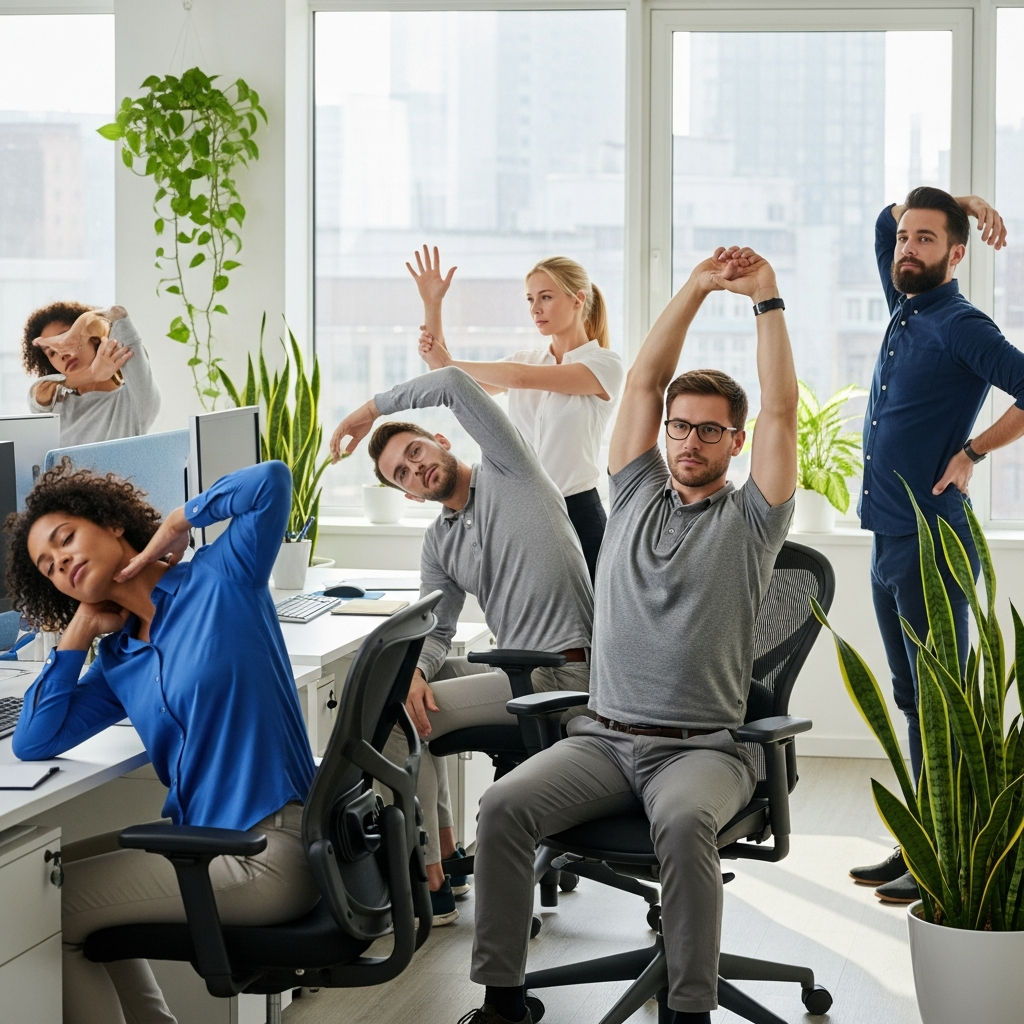
Incorporate desk stretches for office workers throughout your day. Also consider specific upper crossed syndrome exercises to address common desk-related muscle imbalances.
Exercises to Approach with Caution
Some exercises require modification for desk workers:
- Traditional crunches (can strain neck)
- Heavy overhead presses (if shoulder mobility is limited)
- Deep squats (if hip flexors are tight)
- Bench press (can reinforce rounded shoulders)
Ergonomic Exercise Tips for Office Settings
Proper exercise technique is essential for desk job fitness. These ergonomic exercise tips help maintain safety during office workouts. Focus on form over intensity, especially when starting.
Proper Form Fundamentals
Follow these form guidelines for safety:
- Maintain neutral spine alignment during all exercises
- Engage core muscles before movement initiation
- Move through full range of motion without pain
- Breathe consistently throughout exercises
Office Equipment Considerations
Use office equipment safely for exercise:
- Chair: Use for supported squats and stretches
- Desk: Use for incline push-ups and stretches
- Resistance bands: Portable and versatile for office use
- Stability ball: Can replace office chair for core activation
Building a Sustainable Exercise Routine
Consistency matters more than intensity for desk worker injury prevention. This section answers the question: how to exercise safely at a desk job long-term. Start with small, manageable sessions and gradually increase.
Gradual Progression Strategy
Follow this progression plan for safety:
- Week 1-2: 5-minute movement breaks every hour
- Week 3-4: Add 10-minute focused exercise sessions
- Week 5-6: Incorporate resistance training 2-3 times weekly
- Week 7+: Maintain routine with variety
Consistency Techniques
These strategies help maintain your routine:
- Schedule exercise breaks in your calendar
- Set phone reminders for movement breaks
- Keep resistance bands in your desk drawer
- Partner with a coworker for accountability
When to Seek Professional Help
Recognizing when to seek help is crucial for office workout safety. Some issues require professional assessment. The American Council on Exercise recommends consulting professionals for persistent pain.
Warning Signs Requiring Attention
Seek professional help if you experience:
- Sharp, shooting pain during exercise
- Pain that persists for more than 48 hours
- Numbness or tingling in limbs
- Joint swelling or instability
Professional Resources
Consider consulting these professionals:
- Physical therapist for movement assessment
- Certified personal trainer with desk worker experience
- Occupational therapist for workplace adaptations
- Orthopedic specialist for persistent joint issues
For authoritative guidance, consult the American Council on Exercise and National Institute for Occupational Safety and Health resources.
Conclusion: Your Path to Safe Desk Exercise
This desk exercise safety guide provides the foundation for injury-free office workouts. Remember these key takeaways:
- Assess your posture and mobility before exercising
- Choose exercises that counteract desk-related imbalances
- Focus on proper form over intensity
- Progress gradually to avoid overuse injuries
- Seek professional help for persistent issues
Start implementing these strategies today to improve your desk job fitness safely. Remember to optimize your work breaks for maximum benefit. Share your progress in the comments below!
Medical Disclaimer: This article is for informational purposes only and does not constitute medical advice. Always consult a qualified healthcare provider before making changes to your health routine or if you have specific medical concerns.