
Box Breathing for Anxiety: Step-by-Step Guide to Calm & Focus
Did you know that 40% of working professionals report daily anxiety that interferes with their focus? When stress hormones flood your system, your ability to concentrate plummets. The good news is that a simple, science-backed technique called box breathing for anxiety can help you regain control in minutes. This powerful breathing exercise, also known as square breathing, activates your body’s natural relaxation response. Whether you’re facing a tight deadline, preparing for a presentation, or managing daily stressors, mastering this technique can transform how you handle pressure. If you’re new to mindfulness practices, our beginner’s guide to mindfulness meditation offers additional foundational techniques to explore.
What is Box Breathing? The Science Behind the Square
Box breathing, sometimes called four-square breathing, is a structured breathing technique that involves four equal phases: inhale, hold, exhale, hold. Each phase typically lasts four seconds, creating a “box” pattern. This method has roots in ancient practices but gained modern recognition through its use by Navy SEALs to maintain calm under extreme pressure. The American Psychological Association notes that controlled breathing techniques can significantly reduce stress responses. Unlike some complex meditation practices, box breathing requires no special equipment or extensive training. It’s a portable stress management tool you can use anywhere, anytime.
How Box Breathing Reduces Anxiety: The Physiological Magic
When anxiety strikes, your sympathetic nervous system activates the “fight-or-flight” response. Box breathing works by stimulating the parasympathetic nervous system, which promotes relaxation. The structured pattern of this calm breathing technique regulates your heart rate, lowers blood pressure, and reduces cortisol levels. Research published by the National Institute of Mental Health suggests that regular breathing exercises can help manage anxiety symptoms. The rhythmic nature of square breathing creates a meditative focus that distracts from anxious thoughts. For additional stress and tension relief techniques, explore our comprehensive guide to managing daily pressures.
Step-by-Step Guide: How to Do Box Breathing for Anxiety
Ready to try this powerful technique? Follow these simple steps:
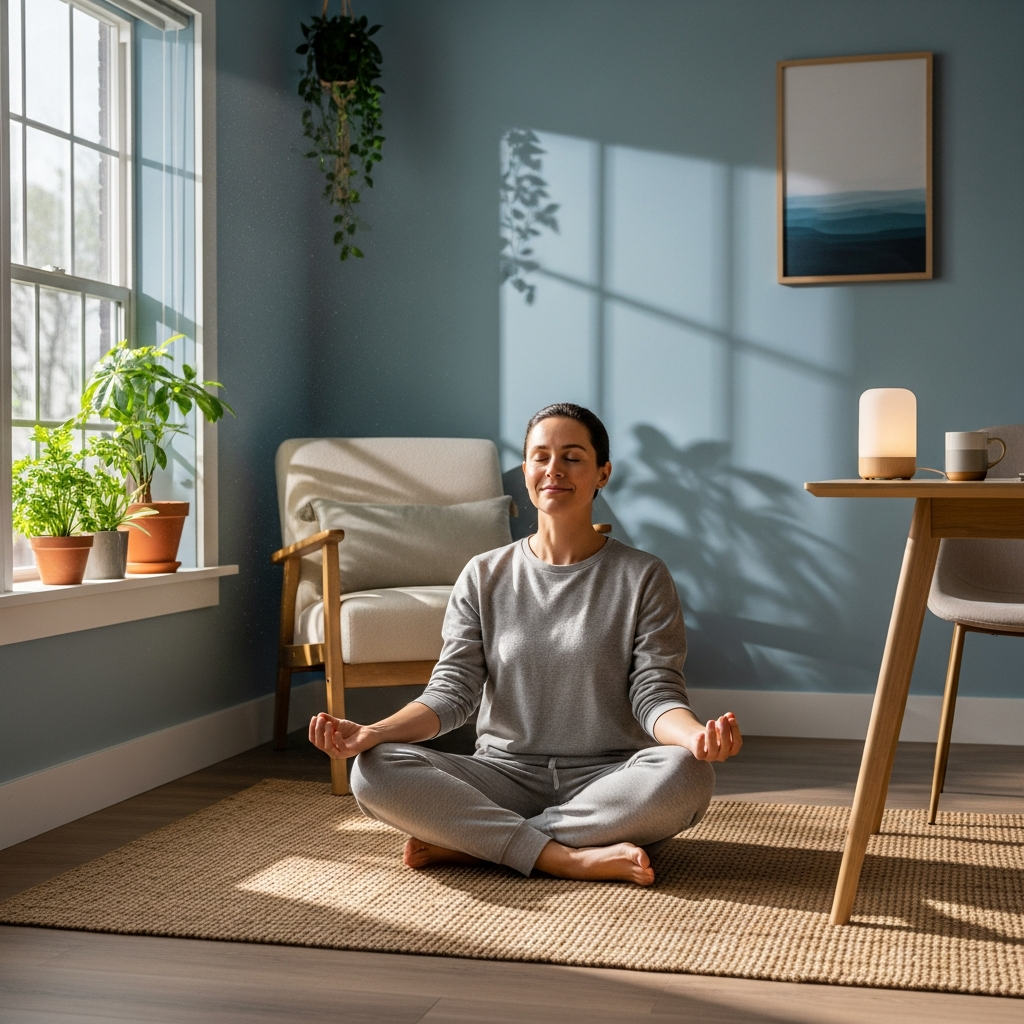
- Find a comfortable position (sitting or lying down)
- Close your eyes gently
- Inhale slowly through your nose for 4 seconds
- Hold your breath for 4 seconds
- Exhale slowly through your mouth for 4 seconds
- Hold your breath for 4 seconds
- Repeat for 5-10 cycles
Begin with shorter sessions of 2-3 minutes and gradually increase as you become comfortable. The key is maintaining equal timing for each phase. If four seconds feels too long, start with three seconds and work your way up. This structured approach makes box breathing one of the best breathing techniques for work stress because it’s easy to remember and implement during busy days.
Box Breathing Benefits for Focus and Productivity
Beyond anxiety reduction, box breathing offers remarkable benefits for mental clarity. The technique oxygenates your brain, improving cognitive function and concentration. Many professionals use this method before important meetings or creative sessions. The rhythmic pattern creates a mental reset, clearing brain fog and enhancing decision-making abilities. Studies show that just a few minutes of controlled breathing can improve attention span by up to 30%. This makes box breathing particularly valuable for students during exams or professionals facing complex tasks. The Mayo Clinic recommends breathing exercises as part of a comprehensive stress management strategy.
Common Mistakes and Pro Tips for Success
While box breathing is simple, beginners often encounter these common pitfalls:
- Rushing through phases (use a timer or count silently)
- Breathing too deeply (aim for comfortable, natural breaths)
- Forgetting to exhale completely (empty your lungs fully)
- Practicing in distracting environments (find a quiet space)
For those interested in related techniques, our guide to 4-7-8 breathing for sleep offers another effective pattern for relaxation. Additionally, mastering diaphragmatic breathing technique can enhance your box breathing practice by ensuring proper breathing mechanics.
Integrating Box Breathing into Your Daily Routine
Consistency transforms box breathing from an occasional tool to a powerful habit. Try these integration strategies:
- Morning routine: Start your day with 5 minutes of box breathing
- Work transitions: Use between meetings or tasks
- Pre-stress moments: Practice before challenging conversations
- Evening wind-down: Incorporate into your bedtime routine
Set reminders on your phone or associate the practice with existing habits (like checking email or drinking coffee). Many people find that 3-5 minute sessions, 2-3 times daily, provide optimal benefits. Remember that like any skill, proficiency with breathing exercises anxiety management improves with regular practice.
Conclusion: Your Path to Calm and Clarity
Box breathing offers a scientifically supported path to managing anxiety and enhancing focus. This simple yet powerful technique requires only minutes per day but delivers significant benefits. Key takeaways include:
- Box breathing activates your body’s natural relaxation response
- The structured 4×4 pattern makes it easy to remember and practice
- Regular use can reduce anxiety symptoms and improve concentration
- It’s a portable tool you can use anywhere, anytime
- Consistency enhances effectiveness over time
Start incorporating this technique today and notice the difference in your stress levels and mental clarity. For additional support, explore our collection of grounding techniques for anxiety to build a comprehensive stress management toolkit.
Medical Disclaimer: This article is for informational purposes only and does not constitute medical advice. Always consult a qualified healthcare provider before making changes to your health routine or if you have specific medical concerns.