
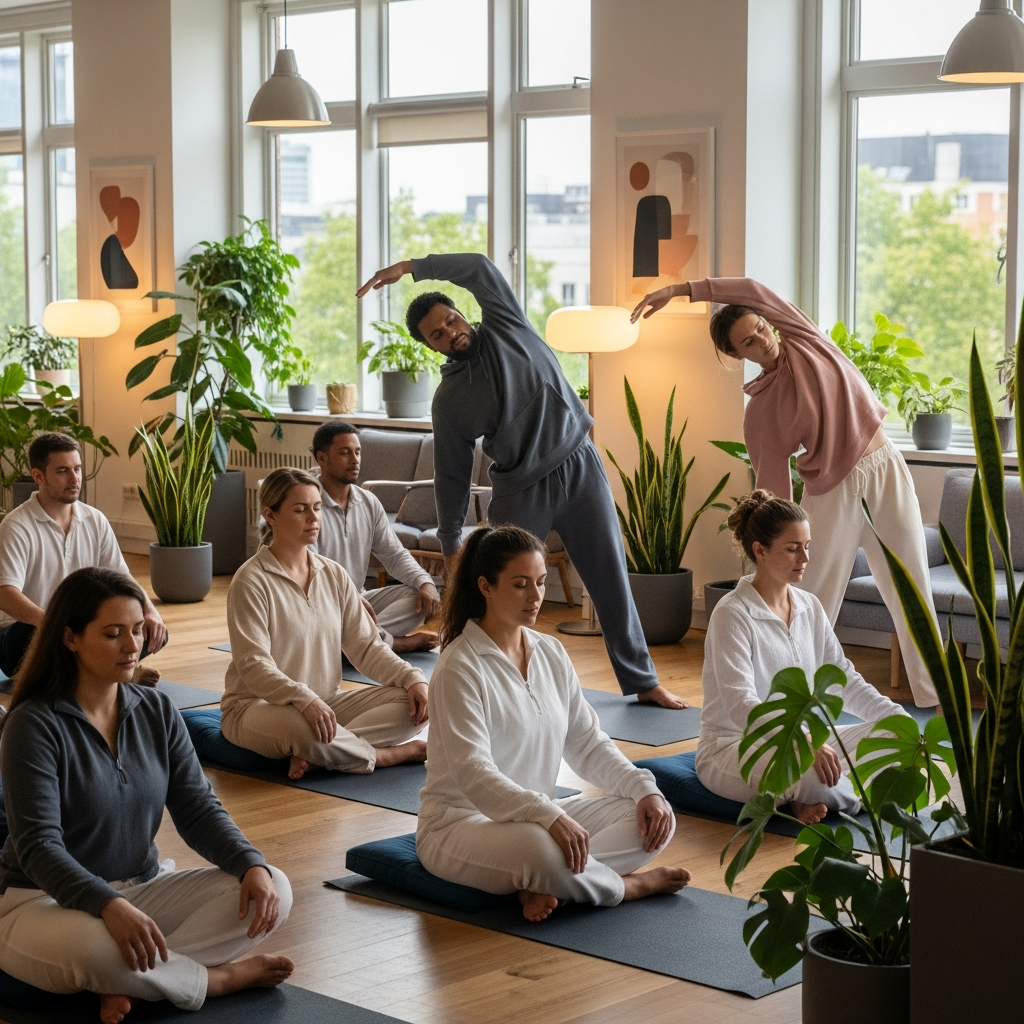
Body Awareness Exercises: 7 Science-Backed Interoception Techniques
Have you ever sat at your desk for hours, only to realize you’ve been holding tension in your shoulders without noticing? Or felt anxiety building but couldn’t pinpoint where in your body it started? This disconnect between mind and body affects millions of people daily. Modern life, with its digital overload and sedentary desk jobs, often leaves us feeling detached from our bodily signals. The good news is that specific body awareness exercises can help you reconnect. These practices, known as interoception training, offer a powerful solution to this modern dilemma. By learning to tune into your internal sensations, you can improve emotional regulation, reduce stress, and enhance overall wellbeing. If you’re new to this concept, our guide to mindfulness meditation provides an excellent foundation for developing greater awareness.
What Is Interoception and Why It Matters
Interoception refers to your ability to perceive and understand internal bodily sensations. This includes everything from hunger and fullness signals to heart rate changes, muscle tension, and temperature fluctuations. Think of it as your body’s internal communication system. When this system functions well, you can accurately interpret what your body needs.
Research from the National Institutes of Health shows that strong interoceptive awareness correlates with better emotional regulation and decision-making. People with good interoception tend to experience less anxiety and depression. They also make healthier choices because they’re more attuned to their body’s needs.
Poor interoception, on the other hand, can lead to various issues. You might eat when you’re not hungry or ignore pain signals until they become severe. Emotional states might feel confusing or overwhelming. The good news? Interoception is a skill you can develop through consistent practice.
The Mind-Body Connection: How Body Awareness Affects Emotional Regulation
Your emotions don’t just exist in your mind—they manifest physically throughout your body. Anxiety might show up as a tight chest or clenched jaw. Excitement could feel like butterflies in your stomach. Sadness might appear as heaviness in your limbs. Understanding this mind-body connection is crucial for emotional health.
When you practice somatic awareness, you learn to recognize these physical cues early. This early detection allows you to address emotional states before they become overwhelming. For example, noticing shoulder tension might alert you to rising stress levels. You can then use emotional regulation techniques to calm your nervous system.
Harvard Health publications highlight how body awareness practices can reduce stress responses. One particularly effective method is body scan meditation, which systematically guides attention through different body areas. This practice not only improves awareness but can also enhance sleep quality.
7 Science-Backed Body Awareness Exercises
Ready to start your interoception training journey? These seven evidence-based exercises can help you develop better body awareness. Start with just one or two that resonate with you, and practice regularly for best results.
1. Body Scan Meditation: Foundation of Awareness
Body scan meditation is one of the most effective body awareness exercises for beginners. This practice involves systematically moving your attention through different body parts. You’ll notice sensations without judgment—whether it’s tension, warmth, tingling, or nothing at all.
How to practice:
- Find a comfortable position, either lying down or sitting
- Close your eyes and take three deep breaths
- Start at your toes, noticing any sensations
- Slowly move upward through feet, ankles, calves, knees, etc.
- Spend 20-30 seconds on each area
- Continue until you reach the top of your head
- Notice how your whole body feels afterward
Research suggests regular body scanning can reduce stress and improve emotional awareness. Aim for 10-20 minutes daily for optimal benefits.
2. Breath Awareness Practice: Your Portable Anchor
Your breath is always with you, making it an ideal focus for interoception training. Breath awareness helps you connect with subtle bodily sensations while calming your nervous system.
Simple breath awareness steps:
- Sit comfortably with your back straight
- Place one hand on your chest, another on your belly
- Notice which hand moves more with each breath
- Observe the temperature of air entering and leaving your nostrils
- Notice any pauses between inhales and exhales
- Practice for 5-10 minutes daily
This practice answers the question “what are interoception exercises for beginners?” with a simple, accessible technique anyone can try.
3. Progressive Muscle Relaxation: Tension Detection
This exercise teaches you to recognize and release muscle tension. It’s particularly helpful for how to improve body awareness for stress management. By systematically tensing and relaxing muscle groups, you learn to distinguish between tension and relaxation.
Practice sequence:
- Start with your feet—tense them for 5 seconds, then release
- Move upward through calves, thighs, glutes, abdomen, etc.
- Pay attention to the difference between tension and relaxation
- Complete the sequence for your entire body
- Notice which areas tend to hold tension
This technique pairs well with other stress relief techniques for comprehensive stress management.
4. Mindful Movement: Dynamic Awareness
Mindful movement practices like yoga, tai chi, or even slow walking can enhance body awareness. The key is to move slowly and pay attention to sensations throughout your body.
Try this simple mindful movement exercise:
- Stand with feet hip-width apart
- Slowly raise your arms overhead, noticing muscle engagement
- Feel your weight shift as you reach upward
- Notice your breath throughout the movement
- Slowly lower your arms with equal awareness
- Repeat 5-10 times with full attention
These practices strengthen the mind-body connection through gentle, intentional movement.
5. Heart Rate Awareness: Cardiovascular Connection
Learning to sense your heart rate without checking a device develops interoceptive accuracy. This skill can help you recognize stress responses earlier.
Heart rate awareness practice:
- Sit quietly and place a hand over your heart
- Try to feel your heartbeat without pressing too hard
- Count beats for 30 seconds, then multiply by two
- Check your accuracy with a pulse oximeter or smartwatch
- Practice daily to improve your sensing ability
Studies show people with better heart rate awareness have stronger emotional regulation skills.
6. Hunger and Fullness Tracking: Digestive Awareness
Many people eat based on external cues rather than internal hunger signals. This exercise helps you reconnect with your body’s natural hunger and fullness indicators.
Hunger-fullness scale practice:
- Before eating, rate your hunger on a scale of 1-10 (1=starving, 10=stuffed)
- Eat slowly, checking in every few minutes
- Stop when you reach a 6 or 7 (comfortably satisfied)
- Notice how different foods make your body feel
- Record your observations in a journal
This practice supports both physical health and emotional resilience by fostering mindful eating habits.
7. Temperature Sensitivity Training: Subtle Sensation Awareness
This exercise develops your ability to notice subtle temperature changes in your body. It’s an advanced practice that builds exquisite sensitivity.
Temperature awareness steps:
- Hold a warm cup of tea in your hands
- Notice where you feel warmth spreading
- Switch to holding something cool
- Observe the difference in sensation
- Try to sense temperature differences between body parts
- Practice in different environments to build sensitivity
This exercise represents the best body awareness techniques for professionals seeking advanced interoceptive development.
Interoception Training for Busy Professionals
If you have a demanding job, you might think you don’t have time for body awareness exercises. However, professionals actually benefit tremendously from interoception training. Desk jobs and digital overload specifically disconnect us from bodily signals.
Micro-practices for the workday:
- Desk-based body scans: Take 2 minutes every hour to scan for tension
- Breath check-ins: Before starting a new task, take three conscious breaths
- Posture awareness: Set reminders to check and adjust your sitting position
- Lunch mindfulness: Eat one meal daily with full attention to taste and fullness
- Walking meetings: When possible, take calls while walking to integrate movement
According to the American Psychological Association, workplace stress remains a significant health concern. Regular interoception practice can help mitigate these effects by improving stress awareness and management.
Common Challenges and How to Overcome Them
Starting any new practice comes with challenges. Here are common obstacles in interoception training and solutions:
Challenge 1: “I don’t feel anything”
This is normal when beginning. Your sensitivity will develop with practice. Start with more obvious sensations like hunger or muscle tension before moving to subtler ones.
Challenge 2: “My mind wanders constantly”
Mind wandering is natural. The practice isn’t about stopping thoughts but noticing when you’ve wandered and gently returning attention. Each return strengthens your awareness muscle.
Challenge 3: “I don’t have time”
Start with just 5 minutes daily. Many exercises can be integrated into existing routines. Try a body scan during your morning shower or breath awareness while commuting.
Challenge 4: “It feels uncomfortable”
Noticing discomfort is actually progress—it means you’re becoming more aware. If emotions arise, acknowledge them without judgment. Remember that awareness is the first step toward change.
Integrating Body Awareness into Daily Life
True transformation happens when body awareness exercises become part of your daily routine. Here are practical strategies for integration:
Create triggers: Link practices to existing habits. For example, practice breath awareness after brushing your teeth or do a quick body scan before checking email.
Use technology wisely: Set gentle reminders on your phone or use meditation apps with short, guided practices. However, balance digital tools with screen-free awareness time.
Build gradually: Start with one practice for one week. Once it feels natural, add another. Consistency matters more than duration.
Notice progress: Keep a simple journal noting what you notice during practices. Over time, you’ll see your sensitivity increasing and stress responses decreasing.
Share with others: Practice with a partner or join a community. Shared experiences can provide motivation and different perspectives.
Conclusion
Developing better body awareness through interoception training offers profound benefits for both physical and emotional health. These body awareness exercises provide practical tools for reconnecting with your body in our increasingly disconnected world.
Key takeaways:
- Interoception is a trainable skill that improves emotional regulation
- Regular practice of even 5-10 minutes daily can yield significant benefits
- Body scan meditation provides an excellent foundation for beginners
- Professionals can integrate micro-practices throughout the workday
- Challenges like mind wandering are normal and part of the process
Remember to approach your practice with self-compassion. Some days will feel easier than others. What matters most is showing up consistently. Start with one exercise that resonates with you, practice it daily for a week, and notice what changes.
We’d love to hear about your experiences with these body awareness exercises. Which techniques worked best for you? What challenges did you overcome? Share your journey in the comments below or with friends who might benefit from better interoception.
Medical Disclaimer: This article is for informational purposes only and does not constitute medical advice. Always consult a qualified healthcare provider before making changes to your health routine or if you have specific medical concerns.