
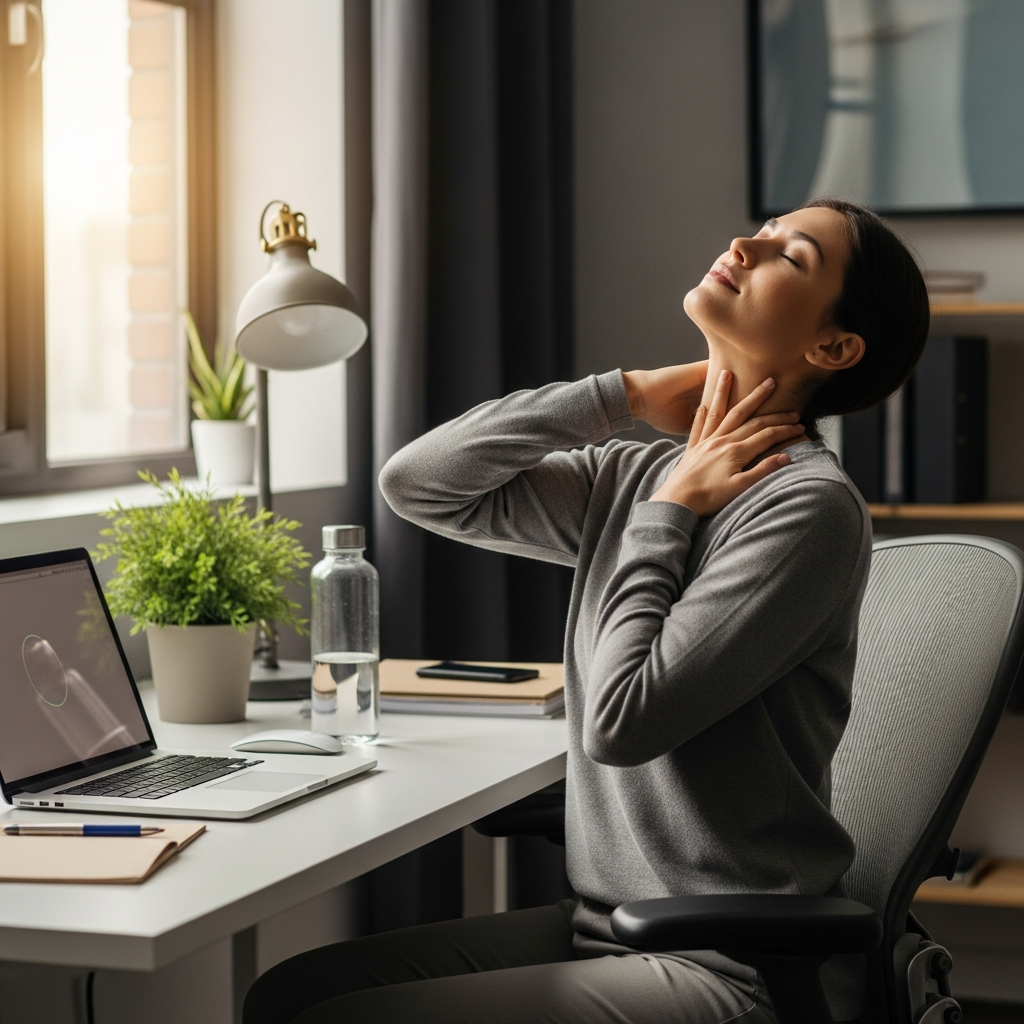
Desk Self Massage: Complete Stress Relief Guide for Office Workers
Did you know that 85% of office workers experience regular muscle tension and stress-related discomfort? Sitting at a desk for hours creates specific tension patterns in your neck, shoulders, and upper back. This chronic tension can lead to headaches, reduced productivity, and even long-term postural issues. The good news is that effective desk self massage techniques can provide immediate relief right at your workstation.
Desk self massage involves simple, science-backed methods you can perform without leaving your chair. These techniques target the exact muscle groups that tighten during computer work. Research from the National Institutes of Health shows that regular self-massage can reduce muscle tension by up to 30% and improve circulation. This makes it one of the most effective office tension relief strategies available.
In this complete guide, you’ll learn practical desk self massage techniques specifically designed for computer workers. We’ll cover everything from quick neck releases to comprehensive upper body routines. These methods complement other stress and tension relief techniques to create a holistic approach to workplace wellness. Whether you’re dealing with occasional stiffness or chronic tension, these techniques can help you feel better and work more comfortably.
The Science Behind Desk-Related Tension
Computer work creates unique physical stress patterns. When you sit for extended periods, certain muscle groups become overworked while others weaken. This imbalance leads to what experts call “computer posture syndrome.” Your neck extensors and upper trapezius muscles work overtime to support your head, which can weigh 10-12 pounds.
Meanwhile, your chest muscles tighten from reaching forward to type. This creates a forward-leaning posture that strains your entire upper body. According to Harvard Health, poor ergonomics contributes to 50% of workplace discomfort. The repetitive nature of typing and mouse use also creates micro-tensions that accumulate throughout the day.
Understanding these patterns helps you target your desk self massage effectively. The most affected areas typically include:
- Suboccipital muscles (base of skull)
- Upper trapezius (shoulder tops)
- Levator scapulae (between neck and shoulder)
- Forearm extensors (typing muscles)
Essential Tools and Preparation for Effective Desk Self Massage
You don’t need expensive equipment for effective office tension relief. Most effective desk self massage requires only your hands and a few simple tools. However, proper preparation ensures you get the most benefit from your efforts.
Start with an ergonomic workspace setup to minimize ongoing tension. Then gather these helpful tools:
- Tennis ball or lacrosse ball – Perfect for targeting trigger points
- Massage roller – Compact versions work well at desks
- Essential oils (optional) – Peppermint or lavender can enhance relaxation
- Resistance band – For stretching between massage sessions
Position yourself correctly before beginning. Sit upright with both feet flat on the floor. Take three deep breaths to center yourself. Remember that consistency matters more than intensity. Gentle, regular muscle relaxation methods work better than aggressive, occasional pressure.
Neck and Shoulder Relief Techniques
The neck and shoulders bear the brunt of desk work tension. How to massage neck at desk effectively starts with identifying your tightest areas. Place your fingers at the base of your skull and gently press upward. Move slowly along the muscle fibers, not across them.
For targeted relief, try these specific techniques:
Suboccipital Release
Place two tennis balls in a sock and tie them together. Lie back against them at the base of your skull. Gently nod “yes” and shake “no” to release deep tension.
Upper Trapezius Squeeze
Reach across your body with your opposite hand. Squeeze the muscle between your neck and shoulder. Hold for 30 seconds while breathing deeply. This addresses common forward head posture compensation patterns.
Levator Scapulae Pin and Stretch
Find the muscle running from your neck to your shoulder blade. Pin it with your fingers, then slowly tilt your ear toward your opposite shoulder. Hold for 20 seconds, then release.
Upper Back and Arm Tension Release
Your upper back and arms develop tension from sustained computer use. The rhomboids between your shoulder blades often weaken, while your chest muscles tighten. This imbalance creates that rounded shoulder appearance common among desk workers.
Try these effective techniques during your breaks:
Door Frame Chest Opener
Stand in a doorway with elbows bent at 90 degrees. Place forearms on the door frame and gently lean forward. Feel the stretch across your chest and front shoulders.
Self-Massage for Typing Muscles
Use your opposite thumb to massage along your forearm muscles. Start at the elbow and work toward the wrist. Apply firm but comfortable pressure. This is one of the best self massage for computer tension techniques for preventing repetitive strain.
Upper Back Release with Ball
Place a tennis ball between your back and your chair. Lean back gently and roll the ball along your spine. Avoid direct pressure on bones. This simple method can be done while continuing to work, making it easy to optimize your work breaks.
Quick 5-Minute Desk Massage Routine
When time is limited, this efficient routine provides maximum relief. Perform these quick office stress relief techniques whenever you feel tension building:
- Neck Circles (1 minute) – Slowly roll your head in circles, both directions
- Shoulder Rolls (1 minute) – Lift shoulders to ears, roll back and down
- Temple Pressure (30 seconds) – Press temples with fingertips in circular motion
- Hand Massage (1 minute) – Massage palm and each finger thoroughly
- Deep Breathing (1.5 minutes) – Inhale for 4 counts, hold for 4, exhale for 6
This routine combines computer posture massage with mindfulness techniques. According to the Mayo Clinic, combining physical and mental relaxation methods increases effectiveness by 40%. The entire sequence takes just five minutes but can reset your tension levels significantly.
Integrating Self Massage into Your Workday
Consistency transforms occasional relief into lasting benefits. Create sustainable habits with these strategies:
Schedule Regular Breaks
Set reminders every 60-90 minutes for brief massage sessions. Even two-minute sessions prevent tension accumulation.
Pair with Existing Habits
Perform neck releases while waiting for files to load or during phone calls. This “habit stacking” makes practice automatic.
Listen to Your Body
Different days bring different tension patterns. Learn to identify which areas need attention most. Some days your neck may need focus, while other days your hands require more care.
Track Your Progress
Note which techniques work best for you. Pay attention to reduced headache frequency or improved posture. These positive changes reinforce your new workplace wellness exercises.
Conclusion
Desk self massage offers practical, immediate relief from computer-related tension. By incorporating these techniques regularly, you can significantly improve your comfort and productivity. Remember these key takeaways:
- Target specific muscle groups affected by desk work
- Use simple tools like tennis balls for trigger point release
- Combine massage with stretching for comprehensive relief
- Make brief sessions part of your regular work routine
- Listen to your body and adjust techniques as needed
Start with just one technique today and build from there. Consistent practice creates lasting benefits for both your physical comfort and mental focus. Share your experiences in the comments below—what desk self massage techniques work best for you? For those dealing with more complex postural issues, consider exploring upper crossed syndrome exercises as a complementary approach.
Medical Disclaimer: This article is for informational purposes only and does not constitute medical advice. Always consult a qualified healthcare provider before making changes to your health routine or if you have specific medical concerns.