
Core Strength Without Crunches: Better Exercises for Desk Workers
Do you spend hours sitting at a desk, only to feel back pain when you try to exercise? You’re not alone. Millions of office workers struggle with weak core muscles and poor posture. Many people believe that crunches are the best way to build core strength, but research suggests otherwise. In fact, crunches may actually contribute to back problems for some people. The good news is that you can achieve excellent core strength without crunches using safer, more effective alternatives. This guide will show you how to strengthen your core muscles while protecting your spine and improving your posture.
Why Crunches Aren’t the Best Core Exercise
Many fitness enthusiasts grew up believing crunches were essential for strong abs. However, modern exercise science reveals several limitations of traditional crunches.
The Problem with Spinal Flexion
Crunches primarily involve spinal flexion – rounding your spine forward. According to the American Council on Exercise, excessive spinal flexion under load can strain the discs in your lower back. This is particularly concerning for people who already spend hours sitting in flexion at their desks.
Limited Core Engagement
Crunches mainly target the rectus abdominis (the “six-pack” muscle) but neglect other crucial core muscles. Your core includes multiple muscle groups that work together:
- Transverse abdominis (deep core stabilizer)
- Internal and external obliques (side muscles)
- Erector spinae (back muscles)
- Pelvic floor muscles
Better Alternatives Exist
Research from Harvard Health Publishing shows that functional core exercises that engage multiple muscle groups simultaneously provide better results with less risk. These exercises mimic real-world movements and improve overall stability.
Foundational Core Exercises for Beginners
If you’re wondering how to strengthen core without crunches, start with these beginner-friendly exercises. These movements build a solid foundation while protecting your spine.
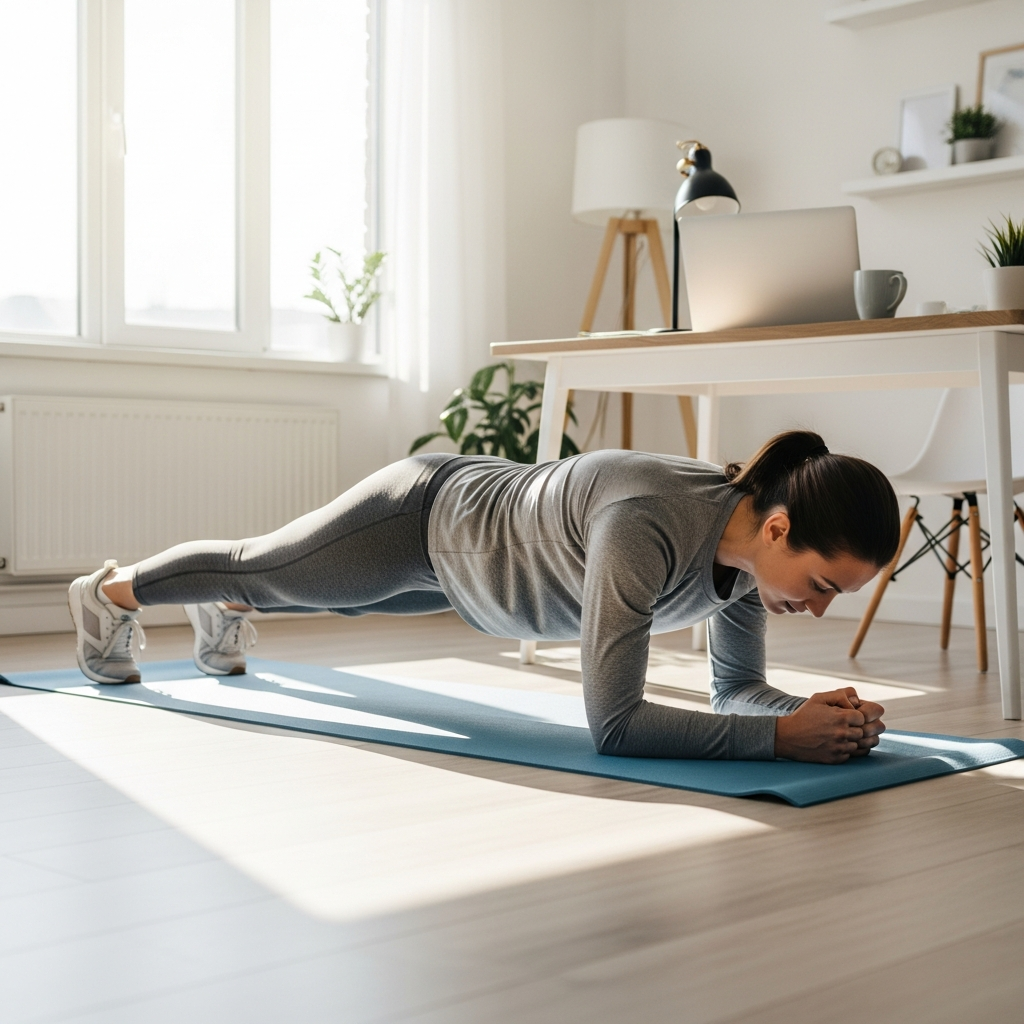
The Plank: Your New Best Friend
The plank is one of the best core exercises for beginners because it engages your entire core without spinal flexion. Here’s how to do it correctly:
- Start on your hands and knees
- Lower onto your forearms, elbows under shoulders
- Extend legs straight behind you
- Engage your core and glutes
- Keep your body in a straight line
- Hold for 20-30 seconds, building up gradually
Bird-Dog for Stability
This exercise improves coordination and stability while working your entire core. It’s particularly helpful for desk workers who need better balance.
Dead Bug for Controlled Movement
The dead bug teaches you to maintain core engagement while moving your limbs. This translates directly to better posture during daily activities.
Core Workouts for Back Pain Relief
Many people experience back pain due to weak core muscles. The right exercises can provide significant back pain relief while strengthening your core. According to Mayo Clinic core exercises, strengthening your core can reduce strain on your back.
Understanding the Core-Back Connection
Your core muscles act as a natural corset that supports your spine. When these muscles are weak, your back muscles must work harder, leading to fatigue and pain. Strengthening your core distributes the load more evenly.
Exercises That Support Your Spine
Bridge exercises are excellent for back pain sufferers because they strengthen the glutes and hamstrings while engaging the core. These muscles work together to stabilize your pelvis and lower back.
If you’re dealing with specific postural issues, learning how to fix anterior pelvic tilt can significantly reduce back strain. Additionally, if you experience nerve-related discomfort, incorporating sciatica exercises for sitting into your routine may help alleviate symptoms.
Progressing Safely
Start with gentle exercises and gradually increase intensity. Listen to your body and stop if you feel sharp pain. Consistency with proper form is more important than intensity.
Desk-Friendly Core Exercises
You don’t need a gym to improve your core strength. These desk exercises can be done throughout your workday to combat the effects of prolonged sitting.
Seated Core Engagement
Practice engaging your core while sitting:
- Sit tall with feet flat on the floor
- Draw your belly button toward your spine
- Hold for 5-10 seconds while breathing normally
- Repeat 10 times every hour
Chair-Based Exercises
Use your office chair for simple core work:
- Seated marches
- Chair twists (gentle rotation)
- Leg extensions with core engagement
Posture Improvement Through Micro-Movements
Small, frequent movements throughout the day can significantly improve your posture improvement. If you struggle with forward head posture, incorporating specific exercises to address upper crossed syndrome exercises can help correct muscular imbalances.
Advanced Core Strength Techniques
Once you’ve mastered the basics, you can progress to more challenging exercises that build serious core strength without crunches.
Anti-Rotation Exercises
These exercises teach your core to resist rotational forces, which is crucial for injury prevention. Pallof presses and cable chops are excellent options.
Dynamic Stability Movements
Exercises like farmer’s walks and suitcase carries build functional strength that translates to daily life. They also improve your grip strength and overall stability.
Balance and Coordination
Advanced core training should include balance challenges. Incorporating balance exercises for adults into your routine can enhance proprioception and prevent falls.
Creating Your Core Routine
Now that you know the best core exercises, let’s build a practical routine. Consistency is key to seeing results.
Sample Beginner Routine (10-15 minutes)
- Plank: 3 sets of 20-30 seconds
- Bird-Dog: 3 sets of 10 reps per side
- Glute Bridge: 3 sets of 15 reps
- Dead Bug: 3 sets of 10 reps per side
Intermediate Progression
Add more challenging variations and increase duration. Consider incorporating equipment like stability balls or resistance bands for added challenge.
Listening to Your Body
Pay attention to how your body responds. Some muscle soreness is normal, but sharp pain indicates you should modify or stop the exercise. Always prioritize proper form over quantity.
Conclusion: Building Lasting Core Strength
Building core strength without crunches is not only possible but often more effective for long-term health. By focusing on functional movements that engage your entire core, you can achieve better results with less risk of injury.
Key Takeaways:
- Crunches aren’t necessary for a strong core and may contribute to back problems
- Planks, bird-dogs, and bridges provide safer, more effective alternatives
- Consistent core work can significantly reduce back pain and improve posture
- Desk-friendly exercises make it easy to strengthen your core throughout the day
- Progress gradually and listen to your body to prevent injury
Start incorporating these exercises into your routine today. Your back will thank you, and you’ll notice improvements in your posture, balance, and overall strength. Share your progress in the comments below or pass this article along to colleagues who might benefit from these core-strengthening techniques!
Medical Disclaimer: This article is for informational purposes only and does not constitute medical advice. Always consult a qualified healthcare provider before making changes to your health routine or if you have specific medical concerns.