Proprioception Training Exercises: Improve Balance & Prevent Injuries
Did you know that one in four older adults falls each year, according to the CDC? Many of these falls could be prevented with better body awareness and balance. This hidden ability, called proprioception, is your body’s “sixth sense” that tells you where your limbs are in space without looking. When proprioception declines, simple tasks become challenging and injury risk increases. The good news is that proprioception training exercises can help rebuild this crucial skill at any age. This beginner’s guide will show you how to improve your body’s internal GPS through simple, effective techniques that enhance balance, coordination, and injury prevention. Whether you’re looking to supplement your balance exercises for adults or starting from scratch, these methods can transform how you move through daily life.
What is Proprioception and Why It Matters
Your Body’s Internal GPS
Proprioception comes from Latin words meaning “one’s own” and “perception.” It’s your nervous system’s ability to sense joint position, movement, and force. Tiny receptors in your muscles, tendons, and joints send constant feedback to your brain. This sensory feedback system works automatically, like your body’s internal GPS. When you walk without looking at your feet or reach for a cup without staring at your hand, you’re using proprioception. This system develops in childhood but can decline with age, inactivity, or injury. Research shows that targeted training can significantly improve proprioceptive function at any stage of life.
The Connection to Balance and Coordination
Proprioception is the foundation of balance training and coordination. Your brain combines information from your inner ear (vestibular system), eyes (visual system), and proprioceptors to maintain stability. When proprioception is sharp, your body makes micro-adjustments to prevent falls. When it’s dull, you might feel unsteady or clumsy. Improved body awareness helps athletes perform better and helps older adults stay independent. The American Physical Therapy Association notes that proprioceptive training is essential for both rehabilitation and prevention programs. By enhancing this sixth sense, you build a stronger connection between mind and body.
Beginner-Friendly Proprioception Training Exercises
Starting proprioception training exercises doesn’t require special equipment or advanced fitness levels. These beginner-friendly techniques answer the common question: how to improve proprioception for beginners? Begin with simple movements and progress gradually. Always work near a stable surface for support if needed. Consistency matters more than intensity when rebuilding neural pathways.
Single-Leg Stance Progression
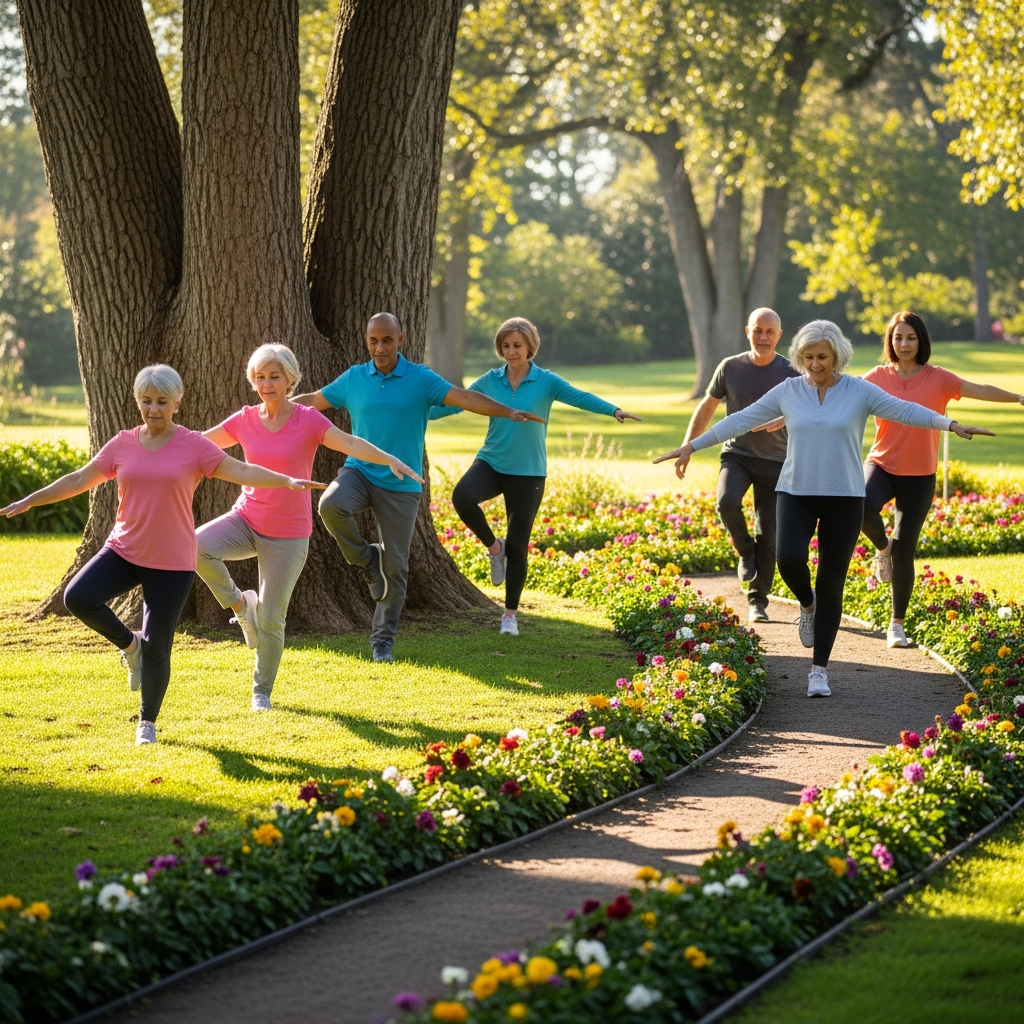
This fundamental exercise develops stability in your ankles, knees, and hips. Start by standing near a wall or chair. Lift one foot slightly off the ground, holding for 10-15 seconds. Focus on keeping your hips level and your standing leg steady. As you improve, try these progressions:
- Increase hold time to 30 seconds
- Close your eyes (with support nearby)
- Stand on a softer surface like a pillow
- Add gentle arm movements while balancing
Perform 3-5 repetitions on each leg daily. This simple practice enhances ankle stability and teaches your body to make automatic adjustments.
Heel-to-Toe Walking
Also called tandem walking, this exercise challenges your dynamic balance. Find a clear pathway about 10-15 feet long. Place the heel of one foot directly in front of the toes of the other foot, as if walking on a tightrope. Go slowly and focus on precision rather than speed. Use these variations:
- Walk forward, then backward along the same line
- Pause for 2 seconds between each step
- Carry a light object while maintaining alignment
- Practice near a wall for added safety
This movement improves coordination exercises and challenges your brain-body connection in motion.
Balance Pad Challenges
Unstable surfaces amplify proprioceptive demands. A balance pad, foam cushion, or folded towel creates gentle instability. Start with double-leg stands on the surface, then progress to single-leg stands. You can also try:
- Gentle weight shifts from side to side
- Mini squats with controlled movement
- Arm reaches in different directions
- Catching a soft ball while maintaining balance
These challenges force your proprioceptors to work harder, strengthening neural pathways. Always maintain proper form rather than pushing to the point of wobbling excessively.
Age-Specific Adaptations for 30+ Adults and Seniors
Proprioception naturally declines with age, but targeted training can counteract this process. The National Institute on Aging emphasizes that balance exercises are crucial for fall prevention in older adults. When considering what are the best proprioception exercises for seniors, safety and gradual progression are paramount.
Safe Progressions for Different Age Groups
For adults in their 30s and 40s, focus on integrating proprioception into existing fitness routines. Add balance challenges to strength training by performing exercises on one leg or with eyes closed. For adults 50+, prioritize consistency over intensity. Shorter, daily sessions yield better results than occasional intense workouts. For seniors, always begin with supported positions and use chairs or walls for stability. The key is to challenge your system without compromising safety.
Using Support When Needed
There’s no shame in using support during proprioception training. In fact, proper support allows you to focus on quality movement. Try these adaptations:
- Place two fingers on a countertop during single-leg stands
- Use a walker or cane for dynamic exercises if needed
- Practice near a sturdy chair you can grab if necessary
- Have a spotter available for more challenging movements
Remember, the goal is to improve function, not to prove you can balance without help. As your proprioception improves, you’ll naturally need less support.
How Proprioception Training Prevents Injuries
The question does proprioception training help with balance issues has a clear answer: absolutely. Beyond improving balance, proprioceptive training serves as powerful injury prevention. When your body knows exactly where it is in space, it can react faster to prevent accidents.
Building Protective Reflexes
Proprioception training develops faster neural responses. When you stumble, well-trained proprioceptors send signals to your brain milliseconds quicker. This allows your muscles to contract appropriately to prevent a fall. Think of it as upgrading your body’s emergency response system. Regular practice creates automatic protective patterns that activate during unexpected situations.
Improving Joint Stability
Strong proprioception enhances joint stability by improving muscle coordination around joints. This is particularly important for injury-prone areas like ankles, knees, and shoulders. For example, better shoulder proprioception can complement shoulder impingement exercises by teaching proper movement patterns. When muscles work together harmoniously, joints experience less stress and wear. This protective effect extends to everyday activities and sports performance alike.
Integrating Proprioception into Daily Life
The most effective proprioception training exercises are those you can incorporate into daily routines. You don’t need dedicated workout time to improve body awareness. Small, consistent habits create significant improvements over time.
Simple Habits for Better Body Awareness
Start with these easy integrations:
- Brush your teeth while standing on one leg
- Practice mindful walking, noticing how your feet contact the ground
- Stand up from a chair without using your hands
- Close your eyes briefly while washing dishes, focusing on hand position
- Take the stairs instead of the elevator when possible
These micro-practices reinforce proprioceptive pathways throughout your day. They’re particularly helpful for addressing postural issues like forward head posture by increasing awareness of head and neck position.
Workplace and Home Modifications
Create environments that encourage proprioceptive engagement:
- Use a balance disc or cushion on your office chair
- Stand on one leg while waiting in line or talking on the phone
- Walk barefoot at home to enhance foot proprioception
- Practice proper sitting and standing alignment to support fixing anterior pelvic tilt
- Create clear pathways at home to practice precision walking
These modifications turn ordinary spaces into proprioceptive training grounds. The more you integrate awareness into daily activities, the stronger your mind-body connection becomes.
Measuring Your Progress and Staying Motivated
Tracking improvements in proprioception can be challenging since it’s an internal sense. However, measurable progress keeps you motivated. The American Physical Therapy Association recommends simple tests to monitor balance and coordination improvements.
Tracking Improvements
Try these monthly assessments:
- Time how long you can stand on one leg with eyes closed
- Count how many heel-to-toe steps you can take without deviation
- Note any reduction in daily stumbles or near-falls
- Track improvements in sports or recreational activities
- Monitor how quickly you recover from unexpected balance challenges
Keep a simple journal to record these metrics. Celebrate small victories, like increasing your single-leg stand time by five seconds.
Setting Realistic Goals
Proprioception improves gradually through consistent practice. Set achievable goals like:
- Practice balance exercises 5 days per week for one month
- Increase single-leg stand time by 50% in 8 weeks
- Walk heel-to-toe for 20 feet without stepping off line
- Perform daily activities with greater confidence and stability
- Reduce reliance on support during exercises
Remember that progress isn’t always linear. Some days will feel easier than others. The key is maintaining consistency even when improvements seem slow.
Conclusion
Proprioception training offers remarkable benefits for people of all ages and fitness levels. By dedicating just a few minutes daily to these exercises, you can significantly enhance your quality of life. Let’s review the key takeaways:
- Proprioception is trainable at any age through consistent practice
- Beginner-friendly exercises like single-leg stands and heel-to-toe walking build foundation skills
- Age-specific adaptations ensure safety and effectiveness for 30+ adults and seniors
- Injury prevention improves as your body develops faster protective responses
- Daily integration creates sustainable habits for long-term benefits
Start your journey today with just five minutes of focused proprioception training exercises. Your future self will thank you for the improved balance, confidence, and independence. For additional guidance, explore the excellent Mayo Clinic balance exercises resource. Share your progress in the comments below or pass this guide along to someone who could benefit from better body awareness!
Medical Disclaimer: This article is for informational purposes only and does not constitute medical advice. Always consult a qualified healthcare provider before making changes to your health routine or if you have specific medical concerns.