478 Breathing: Master This Sleep Technique in 5 Minutes
Tossing and turning at 2 AM? You’re not alone. According to the American Sleep Association, nearly 30% of adults experience insomnia symptoms. The frustration of watching the clock tick while your mind races is all too familiar. But what if you could calm your nervous system and drift into sleep within minutes? The 478 breathing technique offers exactly that promise.
This simple yet powerful breathing exercise has gained popularity for its ability to promote relaxation and improve sleep quality. Developed by Dr. Andrew Weil, the 4-7-8 pattern works by activating your body’s natural relaxation response. Unlike sleeping pills or complicated routines, this technique requires no equipment and takes just minutes to master.
In this comprehensive guide, you’ll learn exactly how to do 478 breathing for sleep, understand the science behind why it works, and discover troubleshooting tips for common challenges. Whether you struggle with occasional sleeplessness or chronic insomnia, this technique may help you achieve the restful sleep you deserve.
What is 478 Breathing and How Does It Work?
The 478 breathing technique is a specific pattern of breath control that involves inhaling for 4 seconds, holding for 7 seconds, and exhaling for 8 seconds. This rhythmic pattern creates a physiological shift in your body that promotes relaxation. The technique belongs to a family of breathing exercises known as pranayama in yoga traditions.
At its core, 478 breathing works by stimulating your parasympathetic nervous system. This is your body’s “rest and digest” system that counteracts the stress response. When you practice this technique, you’re essentially sending a signal to your brain that it’s safe to relax. The extended exhalation phase is particularly important because it activates the vagus nerve.
The vagus nerve plays a crucial role in regulating your heart rate, digestion, and stress response. By engaging this nerve through controlled breathing, you can lower your heart rate and blood pressure. This creates ideal conditions for falling asleep. For more information on vagus nerve stimulation, check out our guide on vagus nerve exercises for anxiety.
The Basic Mechanism Behind 478 Breathing
Here’s what happens in your body when you practice 478 breathing:
- Inhalation (4 seconds): Brings oxygen into your lungs and bloodstream
- Hold (7 seconds): Allows oxygen to circulate and CO2 levels to adjust
- Exhalation (8 seconds): Activates the parasympathetic nervous system via vagus nerve stimulation
This pattern creates a natural sedative effect without any medication. The ratio of 4:7:8 is specifically designed to be calming. The longer exhalation helps empty your lungs more completely, which can reduce anxiety and tension.
How to Do 478 Breathing for Sleep: Step-by-Step Guide
Mastering the 478 breathing technique step by step is easier than you might think. Follow these instructions carefully for best results. Remember that consistency matters more than perfection when starting out.
Preparation and Positioning
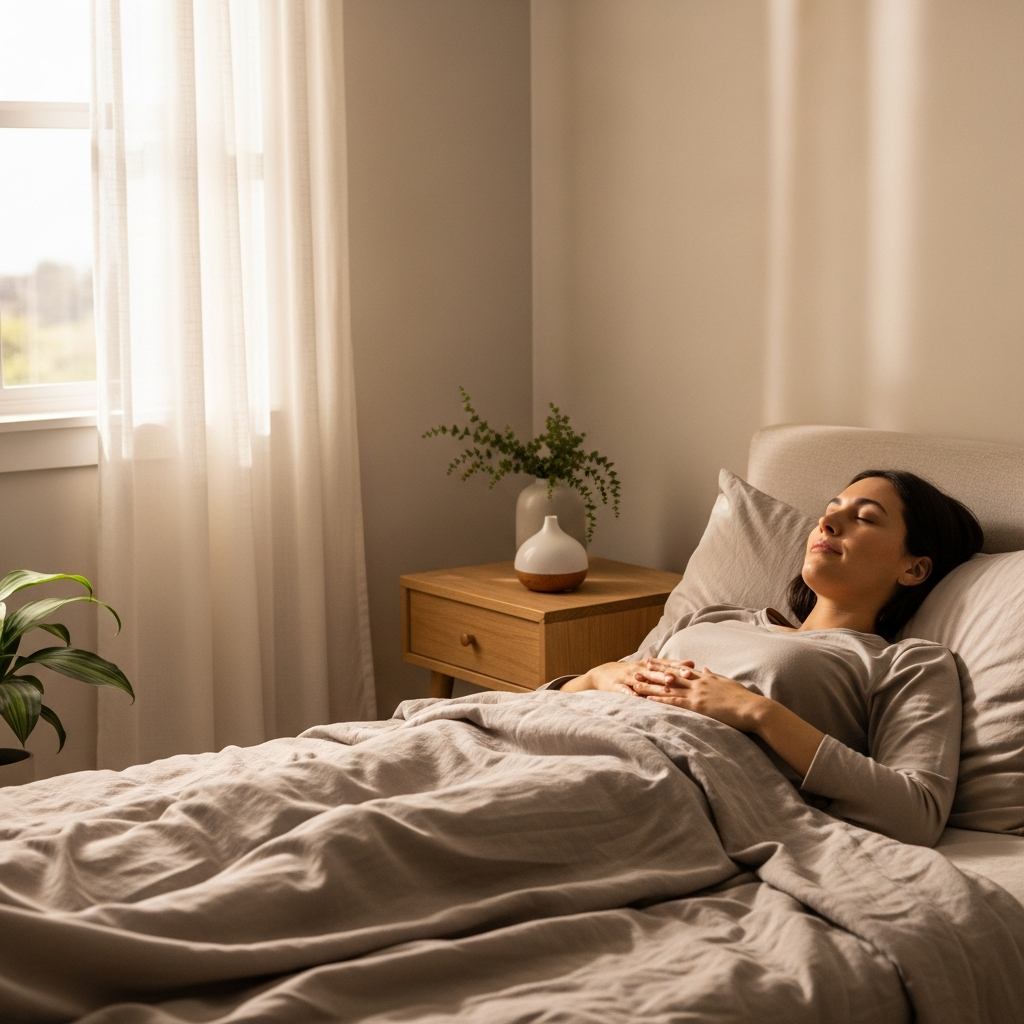
Before you begin, find a comfortable position. You can practice 478 breathing either lying in bed or sitting upright. If you’re using it for sleep, lying down is ideal. Place one hand on your chest and the other on your belly. This helps you ensure you’re breathing diaphragmatically rather than shallow chest breathing.
Close your eyes gently. This reduces visual stimulation and helps you focus inward. Relax your jaw and let your tongue rest against the roof of your mouth, just behind your front teeth. This position helps create a slight resistance during exhalation.
The Complete 478 Breathing Sequence
Follow these steps exactly for each breath cycle:
- Exhale completely through your mouth, making a whooshing sound
- Close your mouth and inhale quietly through your nose for 4 seconds
- Hold your breath for 7 seconds
- Exhale completely through your mouth for 8 seconds, making the same whooshing sound
- Repeat this cycle 3-4 times when starting, working up to 8 cycles
That’s one complete cycle of the 478 breathing technique. The entire process should feel calming, not stressful. If you find yourself struggling to maintain the counts, shorten them slightly while maintaining the 4:7:8 ratio.
Beginner Tips for Success
If you’re new to breathing techniques, these tips will help you get started:
- Practice during the day first, not when you’re desperately trying to sleep
- Use a gentle timer or counting app if needed
- Focus on the quality of breath rather than perfect timing
- Start with just 2-3 cycles and gradually increase
- Be patient with yourself – it takes practice to master
The Science Behind Why 478 Breathing Works for Sleep
You might wonder: does 478 breathing really work? The answer lies in both ancient wisdom and modern science. Research from institutions like Harvard Health Publishing confirms that controlled breathing can significantly impact your nervous system.
Studies show that specific breathing patterns can alter autonomic nervous system activity. The 4-7-8 ratio creates what’s known as “respiratory sinus arrhythmia” – a natural variation in heart rate that occurs with breathing. This variation is associated with better cardiovascular health and reduced stress.
According to the National Institutes of Health, breathing exercises can improve sleep quality by reducing pre-sleep arousal. When your mind is racing with thoughts, your body remains in a state of alertness. Controlled breathing interrupts this cycle by giving your brain a simple task to focus on.
Physiological Effects of 478 Breathing
Here’s what research reveals about how deep breathing affects your body:
- Reduces cortisol levels: The stress hormone that keeps you awake
- Increases heart rate variability: A marker of resilience and relaxation
- Activates the prefrontal cortex: Helps regulate emotions and thoughts
- Stimulates GABA production: A neurotransmitter that promotes calmness
The American Sleep Association notes that breathing exercises are among the most effective non-pharmacological interventions for insomnia. Unlike medication, they have no side effects and can be used indefinitely.
Comparison with Other Breathing Techniques
While 478 breathing is particularly effective for sleep, it’s not the only option. Box breathing (4-4-4-4) is excellent for anxiety management during the day. Diaphragmatic breathing focuses on belly expansion rather than specific counts. What makes 478 breathing unique is its emphasis on the extended exhalation, which is particularly calming for the nervous system.
Troubleshooting Common 478 Breathing Challenges
Many people encounter obstacles when first trying 478 breathing. Here are solutions to the most common problems:
Difficulty Maintaining the Counts
If you find yourself struggling with the 4-7-8 timing, don’t worry. The exact seconds matter less than maintaining the ratio. Try these adjustments:
- Use a shorter pattern like 3-5-6 seconds
- Count silently in your head: “one-one-thousand, two-one-thousand”
- Use a guided audio recording until you internalize the rhythm
- Focus on smooth transitions rather than perfect timing
Remember that the goal is relaxation, not perfection. If counting causes stress, you’re missing the point of the exercise.
Feeling Lightheaded or Dizzy
Some people experience lightheadedness when starting breathing exercises. This usually happens because they’re breathing too deeply or holding their breath too long. To prevent this:
- Breathe more gently – don’t force maximum inhalation
- Shorten the hold time slightly
- Practice sitting up rather than lying down initially
- Take normal breaths between cycles if needed
These sensations typically disappear as your body adapts to the new breathing pattern.
Mental Distractions and Racing Thoughts
If your mind wanders during practice, that’s completely normal. The practice of returning your focus to your breath is actually part of the benefit. For those struggling with persistent anxious thoughts, combining 478 breathing with techniques to stop catastrophizing can be particularly helpful.
Combining 478 Breathing with Other Sleep Strategies
While 478 breathing is powerful on its own, it works even better as part of a comprehensive sleep routine. Here’s how to integrate it with other evidence-based strategies:
Create a Pre-Sleep Ritual
Incorporate 478 breathing into a consistent bedtime routine. About 30-60 minutes before bed:
- Dim the lights and reduce screen time
- Practice gentle stretching or yoga
- Do your 478 breathing practice
- Read a physical book (not on a screen)
- Get into bed and repeat 478 breathing if needed
This ritual signals to your body that it’s time to wind down. Consistency is key – try to follow the same sequence every night.
Address Underlying Sleep Issues
If you have chronic sleep problems, 478 breathing may need to be combined with other approaches. For example:
- If you struggle with staying asleep, consider strategies to increase deep sleep stages
- For irregular sleep patterns, learn how to reset your circadian rhythm
- If anxiety is your primary issue, explore grounding techniques for anxiety
According to Harvard Health Publishing, a multi-faceted approach typically yields the best results for sleep improvement.
Optimize Your Sleep Environment
Your breathing practice will be more effective in a sleep-friendly environment:
- Keep your bedroom cool (around 65°F or 18°C)
- Use blackout curtains or a sleep mask
- Reduce noise with earplugs or white noise
- Invest in a comfortable mattress and pillows
- Remove electronic devices from the bedroom
These environmental factors work synergistically with 478 breathing to promote better sleep.
Conclusion: Your Path to Better Sleep Starts Tonight
The 478 breathing technique offers a simple, science-backed solution to sleep difficulties. With regular practice, you can train your nervous system to relax on command. Remember these key takeaways:
- 478 breathing works by activating your parasympathetic nervous system
- The 4-7-8 pattern creates a natural calming effect without medication
- Consistency matters more than perfection when starting out
- Combine with other sleep strategies for maximum benefit
- Be patient – it may take several weeks to see full results
Tonight, instead of staring at the ceiling, try just three cycles of 478 breathing. Notice how your body responds. With regular practice, this technique can become your go-to tool for calming your mind and preparing for restful sleep.
Share your experience with 478 breathing in the comments below. What challenges did you face? What improvements did you notice? Your insights might help others on their journey to better sleep.
Medical Disclaimer: This article is for informational purposes only and does not constitute medical advice. Always consult a qualified healthcare provider before making changes to your health routine or if you have specific medical concerns.